

Imagine sitting at your computer, working through your to-do list, while your body steadily burns away unwanted fat. It sounds like a dream, doesn’t it? For millions of people working office jobs, weight loss feels like a distant goal that requires hours of grueling workouts after a long, exhausting day.
The good news is that you do not need a gym membership to transform your health. You can achieve steady, sustainable no-gym fat loss right from your office chair.
By understanding how your metabolism works and making small shifts in your daily routine, you can turn a sedentary desk job into a fat-burning opportunity. This comprehensive guide will show you exactly how to boost your daily calorie burn, improve your energy levels, and lose weight without setting foot in a traditional gym.
What is a Sedentary Lifestyle and How Does It Affect Weight Loss?
A sedentary lifestyle describes a way of living where you spend large amounts of time sitting or lying down while using very little energy. Modern office work is a classic example of this behavior. When you sit at a computer for 8 to 10 hours a day, your large muscle groups—like your glutes and thighs—remain completely inactive.
When these muscles stop moving, your body’s metabolism slows down dramatically. The rate at which you burn calories drops to a bare minimum. Over days, months, and years, this lack of movement creates an energy imbalance where you consume more calories than you expend, leading to gradual weight gain.
Achieving fat loss while working an office job requires focusing on your total daily activity, not just formal workouts. Your body expends energy through movement all day long. By targeting the hours you spend at work, you can successfully create a calorie deficit without needing an intense exercise routine.
Causes of Weight Gain at a Desk Job
Weight gain while working an office job rarely happens overnight. Instead, it is the result of several subtle, everyday factors that combine to slow down your progress.
- Prolonged Sitting: Sitting for long periods reduces the activity of an enzyme called lipoprotein lipase. This enzyme is responsible for breaking down fats in your bloodstream. When you sit, your body stores fat rather than burning it for fuel.
- Easy Access to Caloric Snacks: Office environments are frequently filled with temptations, from breakroom donuts to vending machines. Eating these items out of boredom or stress introduces a high volume of empty calories.
- Mindless Eating: Eating your lunch or snacks while typing or answering emails distracts your brain. Studies show that when you do not focus on your food, you miss your body’s natural fullness signals and overeat.
- High Stress Levels: Tight deadlines and demanding workloads trigger the release of cortisol, the body’s primary stress hormone. High cortisol levels are directly linked to increased belly fat storage and cravings for sugary foods.
Signs and Symptoms of a Sluggish Metabolism
When your daily routine lacks movement, your body begins to show clear physical signs that your metabolism has slowed down. Recognizing these signs early can help you take action before significant weight gain occurs.
- Unexplained Weight Gain: You notice the scale creeping up, or your clothes feel tighter around your waist, even though your eating habits have not changed drastically.
- Chronic Fatigue: You feel constantly tired, especially in the afternoon, despite getting a full night of sleep.
- Persistent Brain Fog: You struggle to focus on tasks, experience afternoon mental crashes, and rely heavily on caffeine to get through the day.
- Cold Hands and Feet: A slower metabolism can reduce blood circulation, making you feel cold even in a warm office environment.
- Frequent Bloating and Slow Digestion: Inactivity slows down the movement of your digestive tract, leading to discomfort after meals.
Risk Factors for Weight Gain in Office Workers
While anyone can gain weight, specific habits and environmental factors put certain desk workers at a much higher risk for fat accumulation.
- Commuting Long Distances: Driving or sitting on a train for an hour before and after work adds extra hours of complete physical inactivity to your day.
- Lack of Sleep: Staying up late to finish projects or watch television disrupts hormones that regulate hunger, leading to intense cravings the next morning.
- Dehydration: Many office workers mistake mild dehydration for hunger, leading them to eat a snack when their body actually just needs a glass of water.
- Skipping Breaks: Becoming so engrossed in work that you do not stand up for four or five hours at a time severely depresses your metabolic rate.
Diagnosing the Problem: Assessing Your Daily Energy Burn
Before you can fix a problem, you need to understand it. In the world of weight loss, your total daily calorie burn is broken down into specific components.
Doctors and researchers look at four main parts of your metabolism:
- Basal Metabolic Rate (BMR): The energy your body needs just to keep you alive, breathe, and pump blood while at complete rest.
- Thermic Effect of Food (TEF): The calories your body burns to digest, absorb, and process the nutrients you eat.
- Exercise Activity Thermogenesis (EAT): The calories you burn during intentional, structured workouts like running or lifting weights.
- Non-Exercise Activity Thermogenesis (NEAT): The energy expended for everything we do that is not sleeping, eating, or sports-like exercise.
For desk workers, NEAT is the absolute secret weapon for weight loss. NEAT includes walking to your car, typing, fidgeting, standing, and pacing.
While formal exercise (EAT) only accounts for roughly 5% of your daily energy burn, NEAT can account for up to 15% to 30%. By focusing on expanding your NEAT, you can safely achieve fat loss without ever stepping foot inside a commercial gym.
Treatment Options: The Scientific Approach to No-Gym Fat Loss
To achieve no-gym fat loss, you must shift your perspective away from traditional workouts and focus on continuous, low-intensity movement. The goal is to keep your metabolism active throughout the entire day rather than letting it shut down during office hours.
Medical research shows that breaking up sitting time every 30 to 60 minutes keeps your blood sugar stable and keeps your fat-burning enzymes active. This approach does not require sweating or changing your clothes. Instead, it relies on consistency.
By treating movement as a non-negotiable part of your workday, you reprogram your body to utilize stored fat for energy instead of conserving it.
Lifestyle Changes to Burn Calories at a Desk Job
Transforming your daily routine requires intentional habits that blend seamlessly into a professional environment. These small changes require minimal effort but yield significant results over time.
The Power of Standing
Simply changing your posture can alter your daily calorie burn. Standing forces your core and leg muscles to engage to support your weight.
- Try standing up every time you answer a phone call.
- Conduct short internal meetings as standing huddles rather than sitting in a conference room.
- If your budget allows, invest in a standing desk converter so you can alternate between sitting and standing every hour.
Walk and Talk
Turn your static meetings into active ones. If you have a phone call that does not require you to look at a screen or type on a keyboard, put on your headphones and walk. Pace around your office space, walk down the hallway, or step outside into the fresh air. A 30-minute walking meeting can easily add 2,000 steps to your daily total.
Take the Stairs Logically
The elevator is a major enemy of daily movement. Make a personal rule to always take the stairs if your destination is less than four floors away. If you work on a high floor, get off the elevator three floors early and walk the remaining flight of stairs.
Quick Desk Exercises to Boost Metabolism
You do not need gym equipment to stimulate your muscles. These simple movements can be performed quietly right at your cubicle without drawing unwanted attention.
1.Seated Chair Squats:Lower Body Engagement.
Stand up straight in front of your desk chair. Lower your hips down until your glutes lightly brush the seat of the chair, then immediately stand back up by driving through your heels. Repeat this movement for 15 repetitions to wake up your thigh muscles.
2.Desk Push-Ups:Upper Body Strength.
Place your hands slightly wider than shoulder-width apart on the edge of your sturdy, heavy desk. Step your feet back until your body forms a straight line. Lower your chest toward the desk, then push yourself back up. Perform 10 to 12 controlled repetitions.
3.Seated Calf Raises:Lower Leg Circulation.
While sitting with your feet flat on the floor, lift your heels as high as possible, squeezing your calf muscles at the top. Lower your heels back down. Do this for 30 seconds while reading an email to stimulate blood flow in your lower legs.
4.Core Tucks:Abdominal Activation.
Sit up tall away from the back of your chair. Place your hands on the armrests for support. Engage your lower abdominal muscles and gently lift your knees a few inches off the floor. Hold for two seconds, then lower them. Complete 10 repetitions.
Diet and Nutrition Recommendations for Desk Workers
When you spend your day sitting, your caloric needs are naturally lower than someone who performs manual labor. Therefore, your nutrition must be highly strategic to support fat loss without causing muscle loss or low energy.
Prioritize Lean Protein
Protein is the most crucial nutrient for anyone seeking no-gym fat loss. Digesting protein requires more energy from your body than digesting fats or carbohydrates. This process is known as the Thermic Effect of Food (TEF). Furthermore, protein keeps you feeling full for hours, preventing the urge to raid the office snack drawer.
- Include Greek yogurt, cottage cheese, or tofu in your daily meals.
- Keep healthy snacks available, such as dry roasted chickpeas or handfuls of almonds.
Control Your Carbohydrates
Carbohydrates provide essential energy for your brain, but consuming too many refined carbs when you are inactive leads to fat storage. Swap processed sugars, white bread, and pastries for complex carbohydrates that digest slowly.
- Choose brown rice, quinoa, oats, and sweet potatoes.
- Focus heavily on non-starchy vegetables like spinach, broccoli, cucumbers, and bell peppers to add volume to your meals without excess calories.
Smart Hydration Habits
Mild dehydration often disguises itself as hunger, leading to unnecessary snacking. Keep a large, reusable water bottle on your desk at all times. Aim to drink a glass of water before every meal or snack.
Practical Prevention Tips for Everyday Success
Preventing weight gain before it starts is much easier than trying to lose fat later. Use these simple strategies to protect your health during a busy work week.
- Pack Your Own Lunch: Meal prepping your lunches on the weekend ensures you have healthy, portion-controlled meals ready. This saves you from making poor, high-calorie food choices at a local deli when you are rushed.
- Establish a Clean Desk Policy: Remove all visible candy bowls, chips, and snacks from your immediate workspace. Keeping food out of sight drastically reduces habitual, emotional eating.
- Park Far Away: When arriving at work, intentionally park your car in the furthest corner of the parking lot. If you use public transit, get off one stop early and walk the rest of the way.
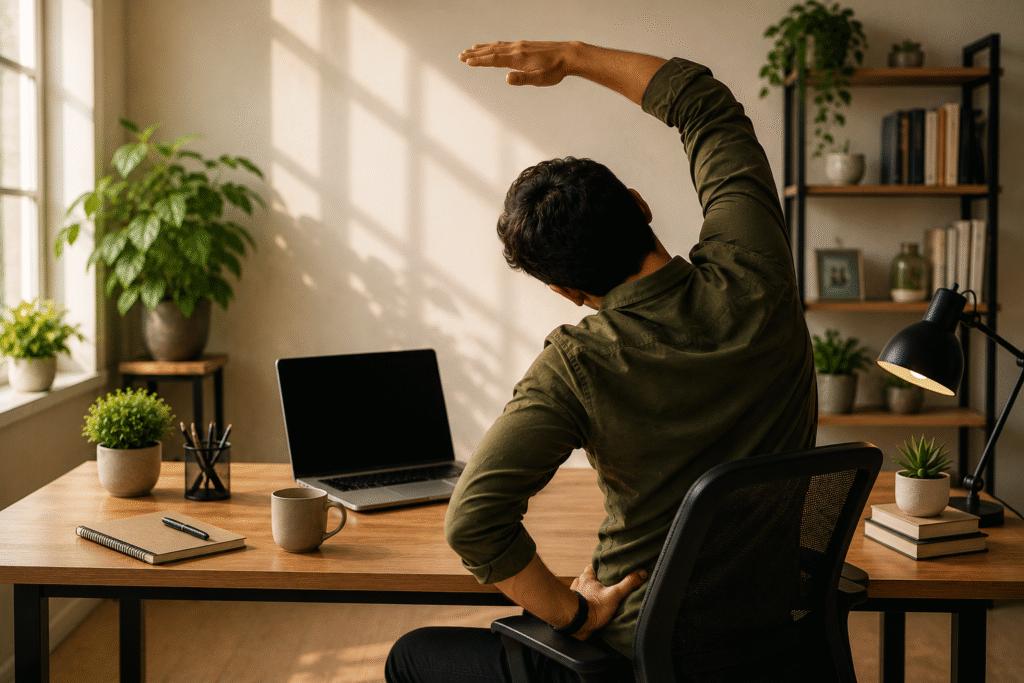
- Set Hourly Reminders: Use a simple smartphone alarm or desktop app that reminds you to stand up and stretch for two minutes every single hour.
Potential Complications of Ignoring a Sedentary Lifestyle
Failing to address a lack of movement does more than just alter your physical appearance. Over time, prolonged sitting combined with poor dietary choices can cause significant health problems.
- Cardiovascular Disease: Long periods of physical inactivity weaken the heart muscle and contribute to arterial plaque buildup, increasing the long-term risk of heart attacks.
- Type 2 Diabetes: Inactive muscles do not absorb glucose efficiently, leading to insulin resistance and chronically high blood sugar levels.
- Chronic Musculoskeletal Pain: Sitting hunched over a keyboard causes tight hip flexors, weak glutes, and poor neck posture, resulting in chronic lower back and shoulder pain.
- Poorer Mental Health: A lack of physical activity reduces the production of endorphins, making office workers more susceptible to chronic anxiety and depression.
Frequently Asked Questions
Can you really lose fat without going to the gym?
Yes, absolutely. Fat loss is fundamentally driven by a calorie deficit, meaning you burn more energy than you consume. By controlling your nutritional intake and increasing your everyday movement through activities like walking and standing, you can successfully lose fat without standard gym workouts.
How many steps should a desk worker aim for each day?
While the standard recommendation is 10,000 steps, desk workers should initially aim for a realistic baseline of 7,000 to 8,000 steps per day. Consistently hitting this range has been shown to significantly reduce health risks and aid in weight management.
Does drinking green tea or coffee help burn fat at a desk?
Black coffee and green tea contain natural stimulants and antioxidants that can slightly boost your metabolic rate. However, these beverages only work if they are consumed without added sugars, heavy creams, or syrups, which add excessive calories.
Is a standing desk actually worth it for weight loss?
A standing desk is a highly effective tool for reducing back pain and preventing your metabolism from shutting down. While it does not burn vastly more calories than sitting, it encourages natural movement, shifting weight from foot to foot, and pacing, which collectively enhances your total daily NEAT.
How do I stop stress eating during intense work hours?
To combat stress eating, replace the habit of reaching for food with a non-food alternative. When you feel stressed, step away from your computer for a three-minute breathing break, drink a cold glass of water, or perform a quick series of stretches.
What are the best office-friendly snacks for fat loss?
The best snacks are portable, high in protein, and low in sugar. Excellent choices include hard-boiled eggs, raw vegetable sticks with hummus, handfuls of walnuts, or low-fat cottage cheese.
Conclusion
Achieving no-gym fat loss while working a demanding desk job is entirely within your control. You do not need to rearrange your life to fit in exhausting late-night workouts or subscribe to complicated fitness trends. Instead, your success lies in reclaiming the hidden movement opportunities scattered throughout your standard workday.
By consciously increasing your daily NEAT, taking short movement breaks, performing subtle desk exercises, and fueling your body with whole foods, you can actively boost your metabolism. These tiny, consistent adjustments compound over weeks and months, leading to sustainable weight loss, clearer mental focus, and dramatically improved long-term health.
