

Herbal Tea Blends for Digestion and Detoxification: A Comprehensive Guide to Natural Cleansing and Gut Health
For centuries, herbal teas have been used in traditional medical systems because of their proven ability to support gut balance, calm the digestive tract, and detoxify the body. Herbal teas provide a gentle, sustainable method of cleansing and reviving your natural energy, in contrast to harsh detox programs.
This post will discuss the best herbal teas for digestion and detoxification, their mechanisms of action, simple at-home recipes, and scientifically supported advice on how to get the most out of your wellness regimen.
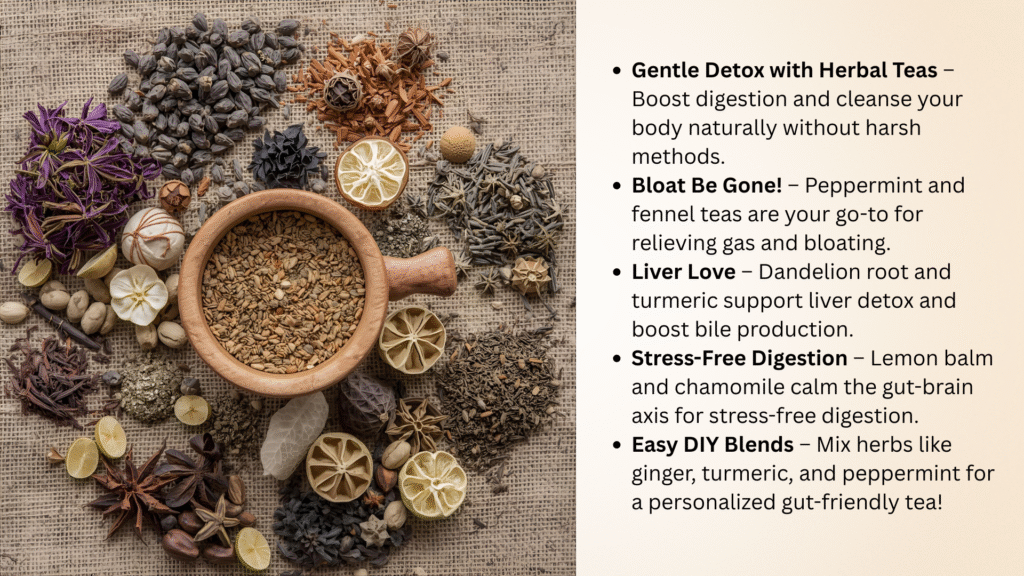
The Benefits of Herbal Teas for Gut Health and Detox
The liver, kidneys, lungs, skin, and digestive system are all part of your body’s natural detoxification process. Simply put, herbal teas facilitate and strengthen these pathways.
Among the main advantages of herbal teas for detoxification are:
- Promoting the removal of toxins and liver function
- Encouraging the production of healthy bile for improved digestion of fat
- Lowering gas, indigestion, and bloating
- Promoting regular bowel movements
- Natural ways to improve pH balance and hydration
Herbal teas are naturally caffeine-free and mild enough to be used on a daily basis, in contrast to caffeinated beverages.
Top Herbal Teas for Digestion and Detox
The most potent herbs listed below can be used to create your own concoctions or consumed on their own. Every herb targets distinct digestive and detoxifying processes.
1. A Natural Liver Detoxifier: Dandelion Root Tea

Botanical Name: Taraxacum officinale
Flavor Profile: Earthy, slightly bitter
Principal Advantages:
- Promotes liver detoxification and increases bile flow
- Helps remove toxins by acting as a mild diuretic
- Lessens water retention and bloating
One of the most well-known herbs for supporting the liver is dandelion root. It is perfect for daily detox support because of its inherent bitterness.
2. Peppermint Tea: A Calm Treatment for Bloating

Botanical Name: Mentha × piperita
Flavor Profile: Mildly sweet, refreshing, and cooling
Principal Advantages:
- Reduces gas, indigestion, and bloating
- Possesses inherent antispasmodic qualities
- Aids in digestive tract relaxation
After meals, peppermint tea is especially beneficial because it eases discomfort and relaxes the muscles in the stomach.
3. Ginger Tea: Enhances Digestion and Metabolism
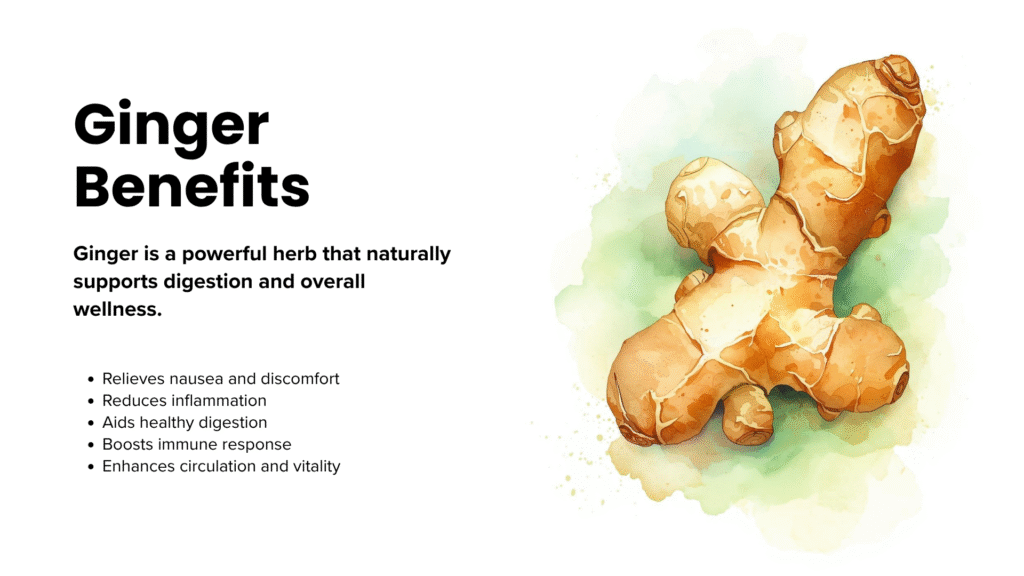
Botanical Name: Zingiber officinale
Flavor Characteristics: Warming and spicy
Principal Advantages:
- Improves metabolism and circulation
- Lessens bloating and nausea
- Encourages the detoxification of the liver
Ginger is a potent ally in enhancing digestion and detoxification because it increases digestive enzymes.
4. Lemon Balm Tea: It Relaxes the Brain-Gut Axis
Botanical Name: Melissa officinalis
Flavor Profile: Mildly citrusy
Principal Advantages:
- Soothes the nervous system
- Relieves stress-induced indigestion
- Aids in liver function
Digestion is frequently disturbed by stress. Lemon balm is perfect for digestive discomfort brought on by stress because it helps control the gut-brain connection.
5. Natural Gas and Bloat Relief with Fennel Seed Tea

Botanical Name: Foeniculum vulgare
Flavor Profile: Sweet with a hint of anise
Principal Advantages:
- Reduces bloating and gas
- Lessens cramping in the stomach
- Facilitates digestion after meals
In many cultures, fennel seed tea is typically consumed after meals to ease bloating and promote digestive comfort.
6. Turmeric Tea: Support for an Anti-Inflammatory Detox

Botanical Name: Curcuma longa
Flavor Profile: Earthy, slightly bitter
Principal Advantages:
- Aids in liver detoxification
- Lessens inflammation in the gut
- Enhances the flow of bile
Turmeric tea is perfect for deeper detox support because its active ingredient, curcumin, is a strong antioxidant and anti-inflammatory.
| Tea Name | Description | Product Image | Link |
|---|---|---|---|
| Anti-Anxiety & Stress Relief Tea | Crafted to help reduce anxiety and stress using natural herbs blended with green tea. |  | View Product |
| Chamomile Green Tea | Combines soothing chamomile with green tea to promote calm and relaxation. Ideal for evenings. |  | View Product |
| Ashwagandha & Green Tea | A wellness blend combining adaptogenic ashwagandha with energizing green tea. Supports stress balance. |  | View Product |
| Calendula & Green Tea | Gentle herbal infusion with calendula and green tea for calming and skin-friendly effects. |  | View Product |
| Butterfly Pea Flower Green Tea | Visually vibrant and rich in antioxidants, this tea also has mild calming properties. |  | View Product |
Visit the full Livisca shop here: https://www.livisca.com
Homemade Herbal Tea Recipes for Digestion and Detox
Herbs can be blended to combine their distinct qualities for focused support. Here are some simple yet efficient recipes:
1. Mild Daily Detox Mixture
Components:
- One teaspoon of dandelion root
- One teaspoon of peppermint leaves
- Half a teaspoon of ginger
Directions:
- Fill a teapot with ingredients.
- Add two cups of boiling water.
- Steep for ten minutes.
- Enjoy and strain.
Drinking is best in the morning when you’re not hungry.
2. Tea for Bloat Relief
Components:
- One teaspoon of fennel seeds
- One teaspoon of peppermint leaves
- Half a teaspoon of lemon balm
Directions:
- Crush the fennel seeds a little.
- For five to seven minutes, steep.
- After meals, take a sip slowly.
20 minutes after eating is the ideal time to drink.
3. Turmeric Tea for Liver Cleanse
Components:
- One teaspoon of powdered turmeric (or fresh turmeric)
- Half a teaspoon of ginger
- A dash of black pepper
- Lemon or honey are optional.
Directions:
- Ginger and turmeric should be simmered in water for five minutes.
- Add lemon or honey.
- Warm up and enjoy.
Drinking is best in the morning or right before bed.
4. Evening Tea That Calms the Gut
Components:
- One teaspoon of lemon balm
- Half a teaspoon of chamomile
- Half a teaspoon of fennel seeds
Directions:
- Fill the teapot with ingredients.
- For five to ten minutes, steep.
- Strain, then take a slow sip.
Drinking is best in the evening, right after dinner.
The Gut-Brain Axis and the Function of Herbal Teas
Because of the gut–brain axis, the gut is frequently referred to as the “second brain.” Everything from energy levels to mental clarity can be impacted by poor digestion.
These herbs promote gut health in the following ways:
- Bitters (turmeric, dandelions): Promote detoxification and bile flow.
- Carminatives, such as peppermint and fennel, help reduce bloating by relaxing the muscles in the stomach.
- Nervines, such as chamomile and lemon balm, soothe the nervous system and ease indigestion brought on by stress.
- Herbs with anti-inflammatory properties, such as turmeric and ginger, lessen intestinal lining irritation.
The beneficial bacteria in your intestines, known as the gut microbiota, are also supported by herbal teas and are essential for immunity and digestion.
How to Make the Most of Your Herbal Teas
- Select high-quality herbs: Tea bags are less effective than loose-leaf and organic varieties.
- Proper steeping: Takes 5 to 10 minutes for most herbs, but longer for roots like dandelion.
- Maintain consistency: Enjoy your blends every day, not just sometimes, for optimal effects.
- Minimize sweeteners: To keep it natural, use lemon or honey sparingly.
- Pay attention to your body: Start out slowly and change the amount or strength as needed.
Crucial Steps to Take Before Beginning a Detox Tea Routine
Herbal teas are potent botanicals despite being natural. Make mindful use of them:
- Women who are nursing or pregnant should speak with a healthcare provider.
- Strong detox herbs should be avoided by people with liver or kidney disorders unless supervised by a physician.
- Certain medications, such as blood thinners, may interact with herbs like turmeric.
- If you take medication or have underlying medical conditions, always get advice from your healthcare provider.
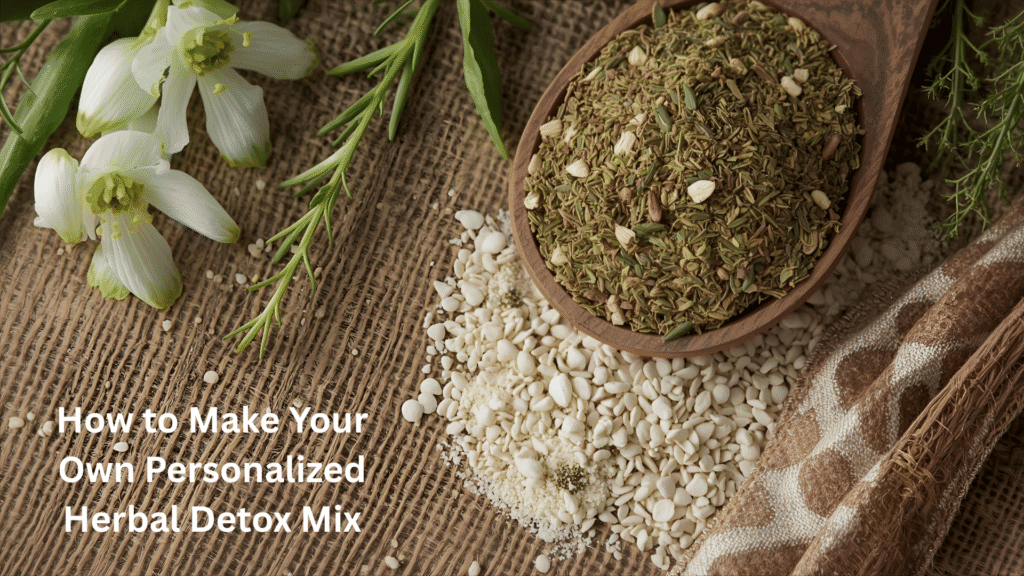
How to Make Your Own Personalized Herbal Detox Mix
It’s simple to make your own blend and gives you complete control over the ingredients.
Easy-to-follow formula:
- Base herb (1 part): Lemon balm, peppermint, or dandelion
- One part of a supporting herb, such as licorice root, chamomile, or fennel
- Activator herb (½ part): Cinnamon, ginger, or turmeric
- Rose petals, hibiscus, or lemon zest are optional aroma enhancers.
Combine and keep in a dark glass container. For every cup of water, use 1 tablespoon.
The Best Methods for Preserving and Making Herbal Teas
- Herbs should be kept out of direct sunlight in airtight, dark containers.
- Write the blend name and date on the jars.
- For the purest taste, use filtered water.
- For a revitalizing summer detox tea, try overnight cold infusions.
- For optimal potency, consume your blend within six months.
Digestion and Detox Beyond Herbal Teas
Although herbal teas are an effective tool, they function best when combined with a holistic way of living. For improved detoxification and gut health:
- Consume a lot of fruits, vegetables, and whole grains that are high in fiber.
- Drink water and herbal teas to stay hydrated.
- Engage in physical activity every day, such as yoga, walking, and stretching.
- Obtain adequate restorative sleep.
- Use meditation or breathing techniques to reduce stress.
Conclusion: Herbal Teas as Everyday Allies for Detoxification
Herbal teas are more than just a warm, comforting beverage; they are age-old health aids that subtly assist the digestive and detoxification systems of the body.
Every herb has a special advantage, whether you decide to use turmeric for inflammation, peppermint for bloating, or dandelion for liver support. You can establish a daily routine that improves your physical and mental health by carefully combining them.
Start with a single blend and work your way up from there. The natural support will be greatly appreciated by your body.
Summary Table: Best Herbal Teas for Detox & Digestion
| Herb | Key Benefit | Best Time to Drink | Ideal Use |
|---|---|---|---|
| Dandelion Root | Liver support, detox | Morning | Gentle cleanse |
| Peppermint | Bloating relief, digestive comfort | After meals | Post-meal soothing |
| Ginger | Boosts metabolism, reduces nausea | Anytime | Detox and warmth |
| Lemon Balm | Calms gut-brain axis | Evening | Stress-related digestion |
| Fennel Seed | Gas relief, smooth digestion | After meals | Bloat remedy |
| Turmeric | Liver detox, anti-inflammatory | Morning or night | Deep detox support |
