

Let’s be honest—most of us don’t wake up feeling perfectly balanced, calm, and ready to take on the day. Some mornings feel heavy for no clear reason, and by evening, we’re drained without knowing exactly why. That’s where Mental Health Care quietly becomes important—not as a big, complicated system, but as small, everyday choices we make. We’ve all tried random tips before that didn’t really stick, so this isn’t about perfection. It’s about finding what actually works in real life. When we start paying attention to how we feel, how we react, and what drains us, things slowly begin to shift. Mental Health Care isn’t about fixing ourselves overnight—it’s about making our days a little lighter, a little more manageable, and honestly, a bit more human.
Why Mental Health Care Is Important for Everyday Life
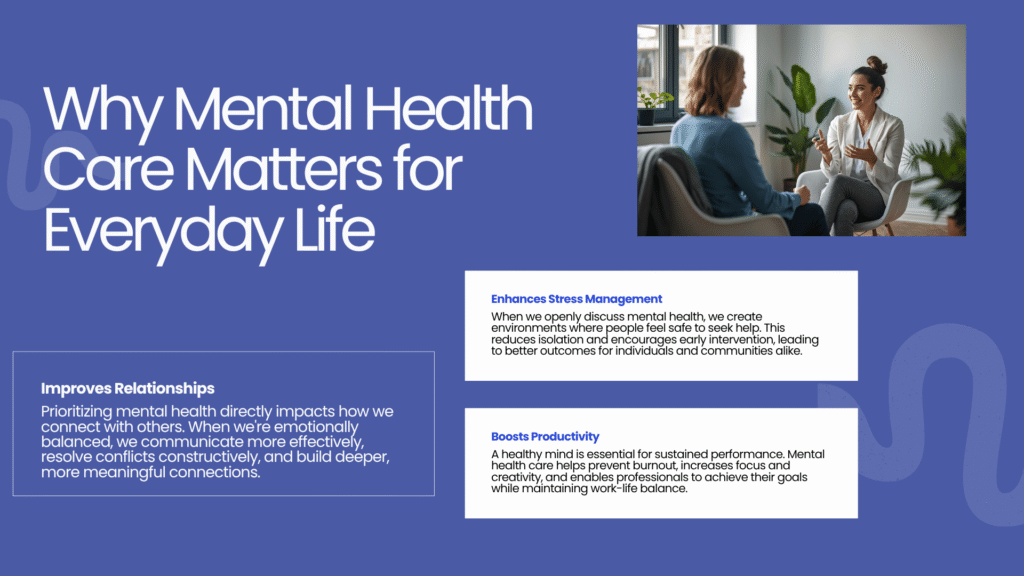
We often underestimate how much our mental state shapes our daily experiences. It’s not just about big emotions or difficult days—it’s in the small moments too. The way we respond to a message, how patient we are in traffic, or whether we feel motivated to finish simple tasks—all of it connects back to Mental Health Care. When we ignore it, life starts feeling harder than it should. But when we give it some attention, things don’t magically become perfect, but they do become easier to navigate. We start noticing patterns, understanding our triggers, and reacting with a bit more awareness. Over time, Mental Health Care helps us feel less overwhelmed and more in control of our everyday life.
How Mental Health Care Helps You Handle Stress Better
Stress doesn’t really go away—it just changes form. Some days it’s work, other days it’s people, and sometimes it’s just everything at once. With proper Mental Health Care, we begin to notice stress earlier instead of waiting until we’re completely burnt out. We learn to pause, even if just for a minute, before reacting. That pause matters more than we think. It gives us space to think clearly and not spiral. When we consistently work on Mental Health Care, we naturally start to handle stress better without forcing it. It’s less about control and more about awareness.
Simple ways to reduce daily stress
We don’t need complicated routines to feel better. Sometimes, stepping away from our phone for a few minutes or taking a short walk helps more than we expect. Even something as simple as sipping a warm cup of Livisca herbal tea in the evening can create a small moment of calm in a chaotic day. Livisca herbal tea These tiny breaks don’t fix everything, but they give our mind breathing space, and that’s often enough to reset.
Importance of calm morning routines
Mornings set the tone, even when we don’t realize it. Rushing through them usually carries that same rushed feeling into the rest of the day. A slower start—even by 10 minutes—can make a noticeable difference. When we begin our day calmly, Mental Health Care becomes part of our routine instead of something we only think about when things go wrong.
Role of Mental Health Care in Improving Relationships
Relationships can be tricky, especially when we’re already stressed or distracted. Without realizing it, we carry our mood into conversations, which affects how we connect with others. Mental Health Care helps us become more aware of our reactions, making it easier to improve relationships over time. It’s not about saying the perfect thing—it’s about being present and emotionally available. When we feel balanced, we listen better, respond more thoughtfully, and avoid unnecessary conflicts.
Communication and emotional balance
We’ve all had moments where we said something we didn’t mean, just because we were overwhelmed. Emotional balance doesn’t mean staying calm all the time—it means recognizing when we’re not. With consistent Mental Health Care, we get better at expressing ourselves without hurting others or bottling things up.
Building stronger personal connections
Strong relationships don’t come from grand gestures. They grow in small, consistent moments—checking in, listening fully, and being there. When we take care of our own mental space, we naturally show up better for others, and that’s what truly helps improve relationships.
How Mental Health Care Helps You Stay Productive
Productivity isn’t just about doing more—it’s about doing things with clarity. When our mind feels cluttered, even simple tasks feel exhausting. Mental Health Care helps us clear that mental noise so we can focus better. We stop jumping between tasks and start completing them with intention. Over time, this shift helps us stay productive without constantly feeling drained.
Focus and time management tips
We don’t always need new tools—sometimes we just need fewer distractions. Setting small goals for the day and sticking to them can make work feel more manageable. When we’re mentally clear, time management becomes less stressful and more natural.
Avoiding burnout in daily life
Burnout doesn’t happen overnight. It builds up slowly when we ignore our limits. With proper Mental Health Care, we learn to recognize when we need a break instead of pushing through everything. That awareness helps us stay productive without exhausting ourselves.
Easy Mental Health Care Tips for Daily Happiness
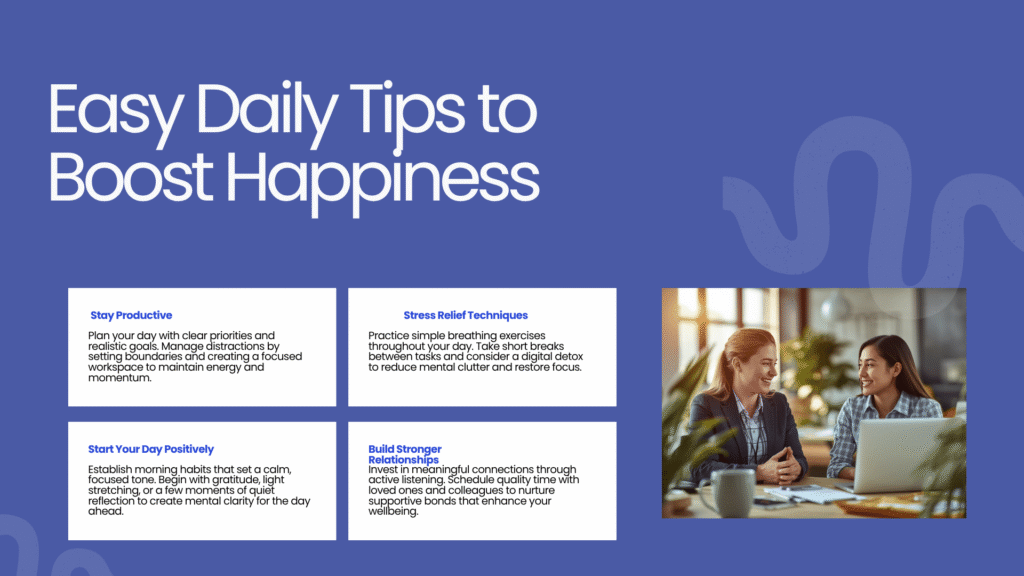
Daily happiness isn’t about big achievements—it’s hidden in small habits. The way we start our day, the breaks we take, and how we treat ourselves during stressful moments all contribute to how we feel. Mental Health Care becomes easier when we stop overcomplicating it. We don’t need perfect routines—we just need consistent, realistic ones. Some days will still feel off, and that’s okay. The goal isn’t to feel great all the time, but to feel better more often. When we build simple habits into our day, Mental Health Care becomes something we live, not something we chase.
Start Your Day with a Positive Mindset
Not every morning feels positive, and forcing it doesn’t help. But we can create small moments that make it easier to start the day. A calm beginning gives us a sense of control, even if the rest of the day is unpredictable. Mental Health Care often starts in these quiet morning moments.
Morning habits for mental clarity
We don’t need a long routine—just a few intentional minutes. Sitting quietly, stretching, or even enjoying a warm drink without distractions can clear our mind more than scrolling ever will. These habits slowly build mental clarity.
Benefits of slow and mindful mornings
When we slow down, we notice more—our thoughts, our mood, and what we actually need. That awareness is a key part of Mental Health Care, and it carries through the rest of the day.
Use Simple Techniques to Handle Stress Better
Stress will show up no matter what, so the goal isn’t to eliminate it—it’s to manage it better. With consistent Mental Health Care, we find simple ways to respond instead of react. Over time, these small techniques make a big difference in how we handle stress better.
Breathing exercises and relaxation
Taking a few deep breaths sounds too simple, but it works. It gives our body a signal to slow down. Even one minute of focused breathing can shift how we feel in stressful moments.
Short breaks and digital detox
We don’t realize how much constant notifications affect us. Taking short breaks away from screens—even briefly—helps reset our mind. It’s a small but effective part of Mental Health Care.
Build Habits That Improve Relationships
Relationships improve when we become more present. That doesn’t mean spending more time—it means being more attentive in the time we already have. Mental Health Care helps us show up better, and that naturally helps improve relationships.
Active listening skills
Listening isn’t just hearing words—it’s understanding them. When we actually listen, conversations feel more meaningful, and misunderstandings reduce.
Spending quality time with loved ones
Even simple moments—like sharing a cup of tea or having a relaxed conversation—can strengthen connections. These small efforts help improve relationships in a natural way.
Daily Routines to Stay Productive and Focused
Staying productive isn’t about constant effort—it’s about smart effort. With proper Mental Health Care, we learn to work with our energy instead of against it. That shift helps us stay productive without feeling overwhelmed.
Planning your day effectively
A simple plan can reduce a lot of mental clutter. Knowing what we need to do—and what can wait—makes the day feel more manageable.
Managing distractions
Distractions are everywhere, but we can control how we respond to them. Small changes, like limiting unnecessary notifications, can help us stay focused.
Long-Term Mental Health Care Habits for a Balanced Life
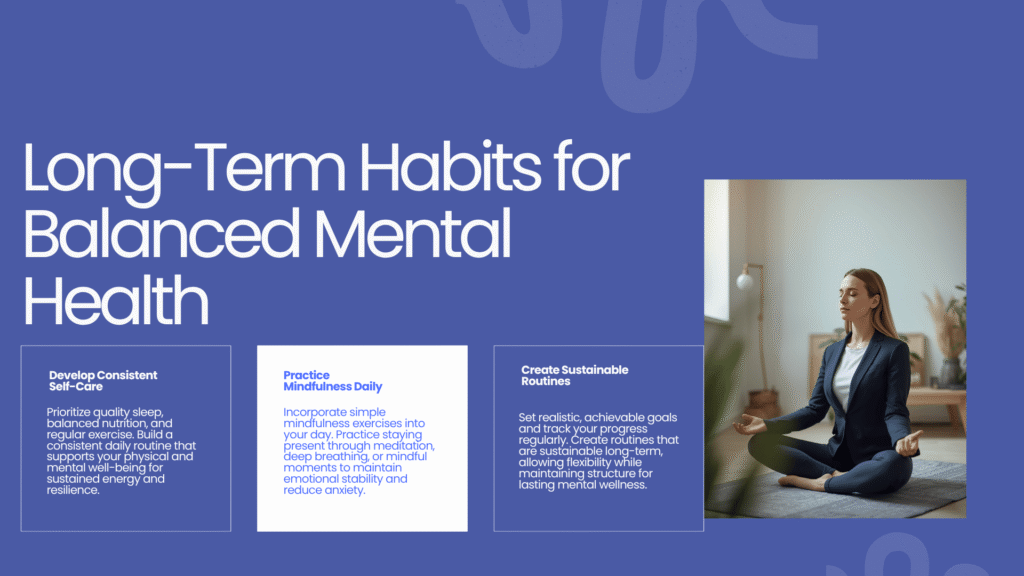
Quick fixes don’t really last, and we’ve probably all experienced that. Real change comes from small habits we stick with over time. Mental Health Care is less about intensity and more about consistency. Some days we’ll follow our routine, other days we won’t—and that’s normal. What matters is coming back to it without guilt. Over time, these habits build a sense of balance that doesn’t depend on perfect days. When we commit to long-term Mental Health Care, life doesn’t become stress-free, but it does become easier to handle.
Develop Consistent Self-Care Practices
Self-care often gets misunderstood as something luxurious or time-consuming. In reality, it’s about basic things we often ignore. Mental Health Care starts with taking care of our body and giving ourselves enough rest.
Sleep, nutrition, and exercise basics
We don’t need extreme routines—just consistency. Getting enough sleep, eating properly, and moving our body regularly creates a strong foundation for mental balance.
Importance of consistency
Doing small things regularly matters more than doing big things occasionally. Consistency is what makes Mental Health Care actually work.
Practice Mindfulness for Emotional Stability
Mindfulness doesn’t have to be complicated or time-consuming. It’s simply about being present in what we’re doing. With regular Mental Health Care, we start noticing our thoughts instead of getting lost in them.
Simple mindfulness exercises
Even focusing on our breath or paying attention while walking can be enough. These small practices help us stay grounded.
Staying present in daily life
When we stay present, we worry less about what’s next. That shift creates emotional stability over time.
Create a Sustainable Mental Health Care Routine
A routine only works if it fits into our real life. Mental Health Care should feel supportive, not like another task on our list. The goal is to build something we can actually maintain.
Setting realistic goals
We don’t need to change everything at once. Starting small makes it easier to stay consistent and avoid frustration.
Tracking progress and growth
Noticing small improvements keeps us motivated. Whether it’s handling stress better or feeling more focused, these changes matter more than we think.
