

When we say Top 10 Superfoods for a Healthy Diet, we’re not talking about trendy powders we forgot about after a week. This list grew out of real meals, tired evenings, and mornings when digestion felt off for no obvious reason. We’ve all tried “clean eating” plans that looked great on paper and fell apart by Thursday. So here, we focus on foods that quietly show up for us—keeping energy steady, meals satisfying, and choices simple. The Benefits of Superfoods only matter when they fit into everyday routines, not ideal schedules. We pay attention to the Nutritional Value of Superfoods, yes, but more importantly, how they behave in real kitchens. This is about clarity, not promises. Food you can trust, even when motivation dips.
Why Superfoods Matter in a Healthy Diet Today
Most people we talk to aren’t lazy about food—they’re overwhelmed. Labels conflict, advice changes weekly, and suddenly breakfast feels like a moral decision. Superfoods matter now because they reduce that noise. They’re reliable anchors when meals feel chaotic or rushed. Instead of chasing perfection, we lean on ingredients that consistently support digestion, focus, and energy. The Benefits of Superfoods show up quietly over time, not overnight. They help smooth out the rough edges of modern eating—too much sitting, irregular meals, stress-snacking at 9 p.m. When chosen wisely, they simplify decisions rather than complicate them. That’s why they still earn their place.
What Are Superfoods and Why Are They Called “Super”?
The word “super” gets overused, and we get the skepticism. In practice, it just means foods that give you more back than they ask for. They’re dense in nutrients, forgiving in meals, and flexible across cuisines. We don’t treat them as magic; we treat them as dependable. Their strength is in consistency—supporting gut health, steady energy, and recovery without demanding strict rules. Once you stop expecting miracles, they start making sense.
Simple Definition of Superfoods for Everyday Eaters
For everyday eaters, superfoods are ingredients that pull extra weight in normal meals. They’re the foods that make breakfast last longer, help digestion feel calmer, or stop the afternoon slump. No special timing. No detox talk. Just foods that work even when the rest of the day isn’t perfect.
How Superfoods Fit Into Real-Life Diets (Not Perfect Diets)
Real diets include skipped lunches, late dinners, and the occasional pastry. Superfoods fit because they don’t require discipline—they offer support. We add them where they make life easier: into soups, snacks, drinks, or simple dinners. Over time, they create balance without pressure. That’s the difference between theory and practice.
Common Situations Where Superfoods Actually Help
They help when digestion feels heavy for no clear reason, when energy dips mid-morning, or when meals feel nutritionally thin. They’re useful after travel, during stressful weeks, or when cooking motivation is low. These are small fixes, not lifestyle overhauls—and that’s why they stick.
Top 10 Superfoods for a Healthy Diet
This list reflects what we actually use and recommend, not what photographs well. Each one earns its place through everyday usefulness and long-term support.
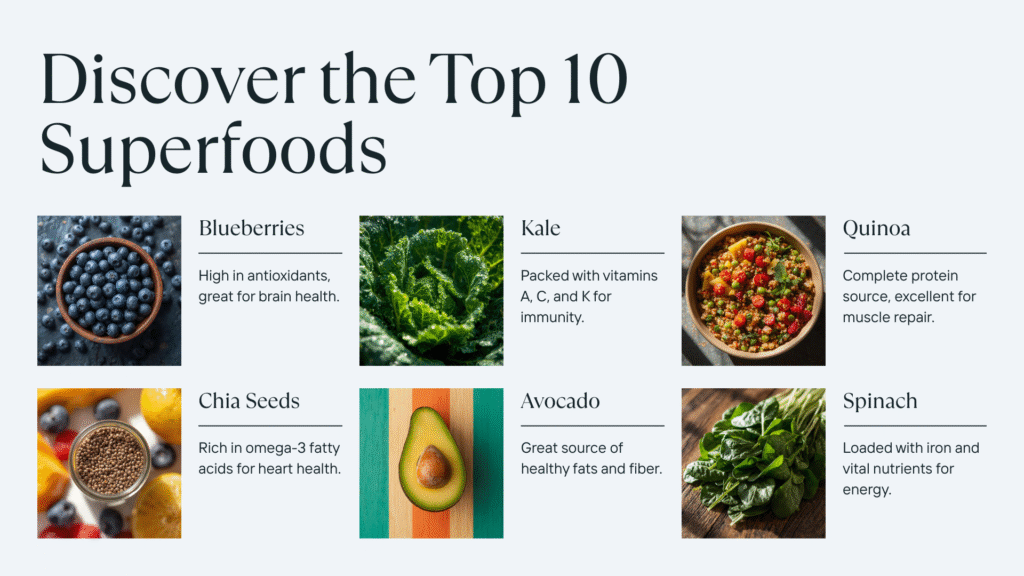
Blueberries – Antioxidant-Rich Superfood for Daily Health
Blueberries are one of those foods you notice missing when you stop eating them. They’re easy, forgiving, and surprisingly grounding.
Benefits of Blueberries and How to Use Them Daily
We toss them into yogurt, oatmeal, or just snack on them mid-afternoon. They support focus and digestion without feeling “functional.” Fresh or frozen both work, which makes them realistic year-round.
Spinach – Nutrient-Dense Leafy Green for Balanced Nutrition
Spinach doesn’t demand commitment. It slides into meals quietly and does its job.
Nutritional Value of Spinach for Everyday Meals
We add it to eggs, soups, or quick stir-fries. The Nutritional Value of Superfoods like spinach shines when you don’t overthink it—just use it often.
Salmon – Omega-3 Rich Superfood for Heart and Brain Health
Salmon is one of those foods you feel better eating regularly, even if you can’t explain why at first.
Why Fatty Fish Matters in a Healthy Diet
It supports brain clarity and recovery, especially during stressful weeks. We keep it simple—baked, grilled, or flaked into bowls.
Quinoa – Plant-Based Protein Superfood
Quinoa is reliable when meals need substance without heaviness.
How Quinoa Supports Energy and Digestion
It keeps energy steady and digestion calm. We batch-cook it and reuse it all week—salads, warm bowls, or quick sides.
Chia Seeds – Fiber-Packed Superfood for Gut Health
Chia seeds are small but noticeable once they’re part of your routine.
How to Use Chia Seeds Daily Without Overdoing It
A spoon in yogurt or soaked overnight is enough. More isn’t better—consistency is.
Greek Yogurt – Probiotic Superfood for Gut and Immunity
Greek yogurt earns trust because it works quietly.
When and How to Add Greek Yogurt to Meals
Breakfast, snacks, or savory dips—it adapts. We choose plain and build flavor ourselves.
Almonds – Healthy Fats Superfood for Sustained Energy
Almonds are practical fuel, especially on long days.
Portion-Smart Ways to Eat Almonds Daily
A small handful between meals goes a long way. They prevent crashes without feeling heavy.
Sweet Potatoes – Complex Carb Superfood for Long-Lasting Energy
Sweet potatoes feel grounding in a way refined carbs don’t.
Why Sweet Potatoes Are Better Than Refined Carbs
They digest slowly and keep meals satisfying. We roast a batch and use them all week.
Green Tea – Antioxidant-Rich Drink for Metabolism Support
Green tea is gentle support, not a stimulant fix. We often rotate it with Livisca herbal tea from https://www.livisca.com/ when digestion needs extra calm.
Visit – https://www.livisca.com
| Tea Name | Description | Product Image | Link |
|---|---|---|---|
| Immunity Booster Tea Ayurvedic | Ayurvedic Immunity Booster Tea with herbs and spices to strengthen immunity and support daily wellness. |  | View Product |
| Chamomile Green Tea | Combines soothing chamomile with green tea to promote calm and relaxation. Ideal for evenings. |  | View Product |
| Ashwagandha & Green Tea | A wellness blend combining adaptogenic ashwagandha with energizing green tea. Supports stress balance. |  | View Product |
| Calendula & Green Tea | Gentle herbal infusion with calendula and green tea for calming and skin-friendly effects. |  | View Product |
| Butterfly Pea Flower Green Tea | Visually vibrant and rich in antioxidants, this tea also has mild calming properties. |  | View Product |
Best Time to Drink Green Tea for Maximum Benefits
Mid-morning or early afternoon works best—enough lift without disrupting sleep.
Turmeric – Anti-Inflammatory Superfood Spice
Turmeric shows its value over time, not instantly.
How to Use Turmeric Correctly for Better Absorption
We add it to soups or warm drinks with a pinch of black pepper. Small, regular use matters more than quantity.
How to Use Superfoods Daily Without Overcomplicating Your Diet
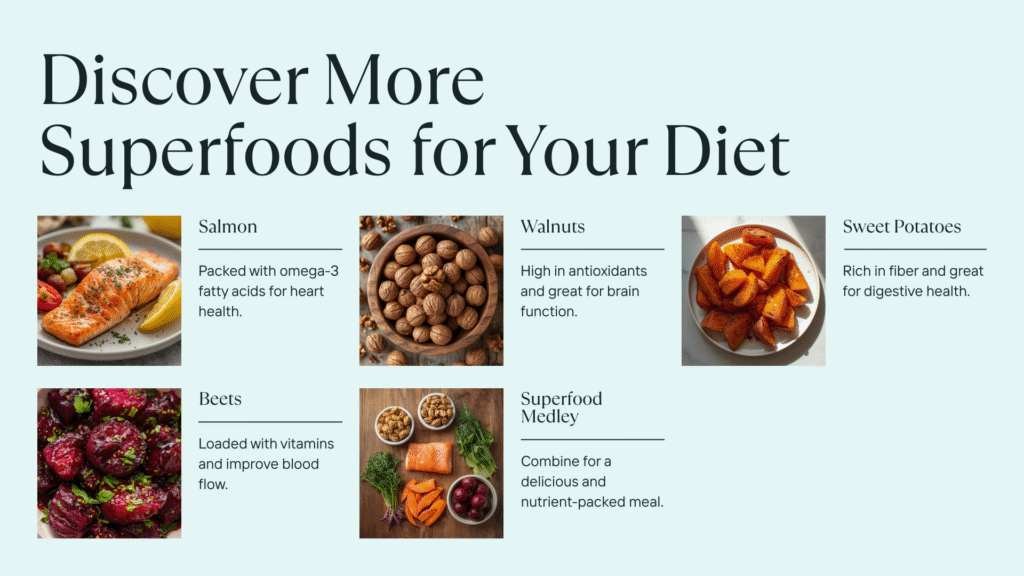
The key to How to Use Superfoods Daily is removing pressure. We don’t stack them all at once—we rotate. One or two per meal is enough. Over time, these small habits create stability without burnout.
Simple Ways to Add Superfoods to Regular Meals
Think toppings, swaps, and simple drinks. Add berries instead of sugar. Choose herbal teas like Livisca when your gut feels off. Keep it boring enough to repeat.
Easy Breakfast, Lunch, and Dinner Ideas
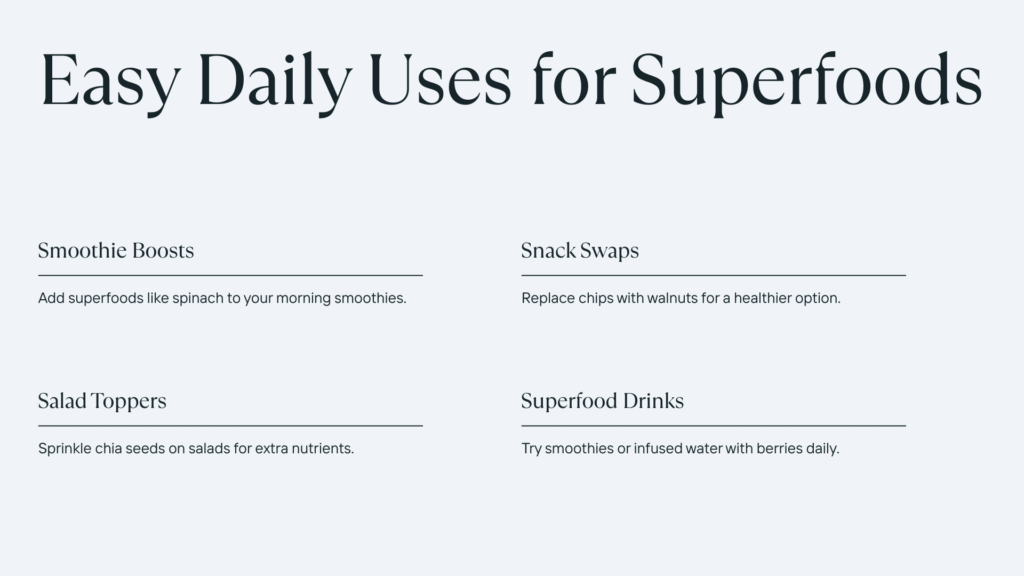
Yogurt with seeds, grain bowls with greens, roasted vegetables with spices. Nothing fancy—just repeatable.
FAQ:
Q1: What are the top 10 superfoods for a healthy diet?
The top 10 superfoods for a healthy diet include blueberries, spinach, salmon, quinoa, chia seeds, Greek yogurt, almonds, sweet potatoes, green tea, and turmeric. These foods are nutrient-dense, easily available, and provide real health benefits when eaten regularly. They support energy, digestion, heart health, brain function, and immunity without requiring expensive ingredients or complicated recipes.
Q2: How often should I eat superfoods to see benefits?
Consistency matters more than quantity. The benefits of superfoods appear when you eat them regularly—aim for daily or several times weekly. For example, eat berries and greens daily, salmon 2-3 times per week, and drink green tea regularly. You won’t see dramatic overnight changes, but over weeks and months you’ll notice better energy, improved digestion, and overall wellness. Make them part of your normal routine, not occasional additions.
Q3: Can I eat superfoods if I’m on a budget?
Absolutely. The nutritional value of superfoods doesn’t require expensive versions. Buy frozen blueberries and spinach (just as nutritious as fresh), choose canned salmon, purchase almonds in bulk, and opt for regular sweet potatoes over specialty varieties. Quinoa, chia seeds, and turmeric are affordable when bought in reasonable quantities. Focus on consistency with budget-friendly options rather than buying expensive trendy superfoods you won’t use regularly.
Q4: What’s the best way to use superfoods daily without cooking complicated meals?
Keep it simple. Add spinach to eggs, toss blueberries in yogurt, snack on almonds, use quinoa instead of white rice, sprinkle chia seeds on oatmeal, and drink green tea. These require minimal prep. Batch-cook quinoa and sweet potatoes at week’s start. Keep frozen berries and greens stocked. The key is making superfoods convenient so healthy eating happens by default, not by effort.
Q5: Are there any side effects of eating too many superfoods?
Yes, more isn’t always better. Too much fiber from chia seeds can cause bloating. Excessive green tea may disrupt sleep or cause stomach upset. Overeating almonds adds unnecessary calories. The nutritional value of superfoods works best in moderate, consistent amounts. Start with recommended portions, listen to your body, and increase gradually. Balance is key—superfoods should complement a varied diet, not dominate it.
