

What Causes a Slow Metabolism and Why It Matters for Your Health
We used to think metabolism was just about how fast we burn calories, but it’s honestly more layered than that. Hormones, sleep, stress, even how regularly we eat—all of it plays a role, sometimes quietly working against us. When metabolism slows down, it doesn’t just show up as weight gain; it creeps into our energy levels, digestion, and mood. We’ve seen days where eating less somehow made things worse, not better, which feels frustrating and confusing. That’s where understanding Simple Fixes for Slow Metabolism Naturally becomes important—it shifts the focus from restriction to support. Things like long gaps between meals, chronic stress, or poor gut health can signal the body to conserve energy instead of using it. And over time, that affects how we feel day to day, not just how we look. It matters because a sluggish metabolism isn’t just about weight—it’s about feeling off, even when we’re trying. The good news is, once we spot the patterns, small changes can actually start turning things around.
Common Signs Your Metabolism Is Slowing Down
Sometimes it’s not obvious at first—it’s not like the body sends a clear signal saying “hey, metabolism’s slowing.” For us, it showed up in bits and pieces—low energy in the morning, random cravings, feeling cold more often than usual. These are the kinds of signs people usually ignore or brush off. But when they start adding up, they point toward something deeper. That’s where paying attention helps, because Simple Fixes for Slow Metabolism Naturally often begin with noticing what feels “off.” It could be digestion slowing down, or needing more caffeine just to get through the day. None of these things feel dramatic on their own, but together, they tell a story. And honestly, once we started listening to those signs instead of pushing through them, things slowly began improving.
Unexplained Weight Gain and Low Energy Levels
We’ve all had that phase—eating almost the same, maybe even less, but still gaining weight or feeling heavier somehow. It’s frustrating, especially when energy levels drop at the same time. You wake up tired, feel sluggish after meals, and by evening, everything just feels like a drag. This is where Simple Fixes for Slow Metabolism Naturally start making sense, because it’s rarely about willpower. Sometimes the body just adapts to stress, under-eating, or poor sleep by slowing things down. We noticed that skipping meals actually made us more tired, not lighter. And the weight gain? It felt unfair, but it had reasons. When the body isn’t getting consistent signals of safety and nourishment, it holds on instead of letting go. Understanding this changes how we respond—it becomes less about forcing results and more about supporting the system.
Difficulty Losing Weight Despite Diet and Exercise
This one hits hard, especially when you’re genuinely trying—eating clean, working out, doing “everything right,” yet nothing moves. We’ve been there, questioning if we’re missing something obvious. But often, it’s not about doing more; it’s about doing things differently. Overtraining, under-eating, or constantly switching routines can confuse the body. That’s why Simple Fixes for Slow Metabolism Naturally focus on balance rather than extremes. We found that giving the body enough fuel and recovery time actually helped more than pushing harder. It’s a bit counterintuitive, honestly. Progress feels slow at first, but it starts showing up in energy, mood, and eventually, weight. Sometimes the issue isn’t effort—it’s direction.
Top Lifestyle Factors That Affect Metabolism
When we looked closer, lifestyle habits were quietly shaping everything. Not the big dramatic stuff, but everyday patterns—late nights, inconsistent meals, sitting too long. These things don’t seem serious in the moment, but over time, they add up. That’s why Simple Fixes for Slow Metabolism Naturally often start with lifestyle, not supplements or shortcuts. Even something like eating while distracted or skipping breakfast regularly can impact how the body processes energy. We noticed that once routines became more stable, things felt less chaotic internally too. It’s not about perfection—honestly, we still have off days—but awareness makes a difference. Small, steady improvements tend to work better than sudden overhauls.
Poor Sleep and High Stress Levels
Sleep and stress—these two can quietly mess with metabolism more than we expect. We’ve had phases of getting “enough” sleep but still waking up tired, which usually tied back to stress. When cortisol stays high, the body doesn’t prioritize fat burning or energy efficiency. That’s where Simple Fixes for Slow Metabolism Naturally become more about calming the system than pushing it. Simple things like winding down earlier or cutting screen time at night helped more than we thought. And stress—it’s tricky, because it’s not always avoidable. But managing it, even a little, changes how the body responds. It’s less about perfect sleep and more about better sleep, consistently.
Sedentary Lifestyle and Lack of Movement
We used to think workouts were enough—but the rest of the day matters just as much. Sitting for long hours, barely moving between tasks, it all slows things down. Even if you hit the gym, a mostly inactive day can still impact metabolism. That’s why Simple Fixes for Slow Metabolism Naturally include just moving more in general—walking, stretching, even standing breaks. It doesn’t sound like much, but it adds up. We noticed better energy on days we stayed lightly active compared to intense workout days followed by long sitting hours. The body likes regular movement, not just bursts of effort.
Simple Fixes for Slow Metabolism Naturally That Actually Work
We’ve tried quick fixes before, and honestly, most didn’t stick. What worked better were small, practical shifts we could actually maintain. That’s the idea behind Simple Fixes for Slow Metabolism Naturally—not dramatic changes, but realistic ones. Eating regularly, moving more, managing stress—it sounds basic, but consistency makes it effective. We didn’t see overnight results, and that’s okay. The changes felt subtle at first, then gradually more noticeable. Energy improved, digestion felt smoother, and things just worked better overall. It’s not about doing everything perfectly—it’s about doing enough, often enough.
Improve Your Diet to Support a Faster Metabolism
Diet plays a bigger role than we thought, but not in the restrictive way we assumed. Eating too little actually slowed things down for us, which felt counterproductive. That’s where Simple Fixes for Slow Metabolism Naturally helped reframe things—focus on nourishment, not just calories. Balanced meals with protein, fiber, and healthy fats made a difference in how we felt. Also, timing mattered more than expected. Long gaps between meals left us drained and more likely to overeat later. Once we made meals more consistent, energy stabilized. It wasn’t perfect every day, but it was better.
Eat Protein-Rich Foods to Boost Thermogenesis
Protein isn’t just for muscle—it actually helps the body burn more calories during digestion. We didn’t realize how much of a difference it makes until we started including it in most meals. Eggs, lentils, paneer—simple options, nothing fancy. That’s one of those Simple Fixes for Slow Metabolism Naturally that feels manageable. It also helped with cravings, which was a nice bonus. We stayed fuller longer and didn’t snack mindlessly as much. It’s not about high-protein extremes, just enough to support the body.
Stay Hydrated for Better Calorie Burning
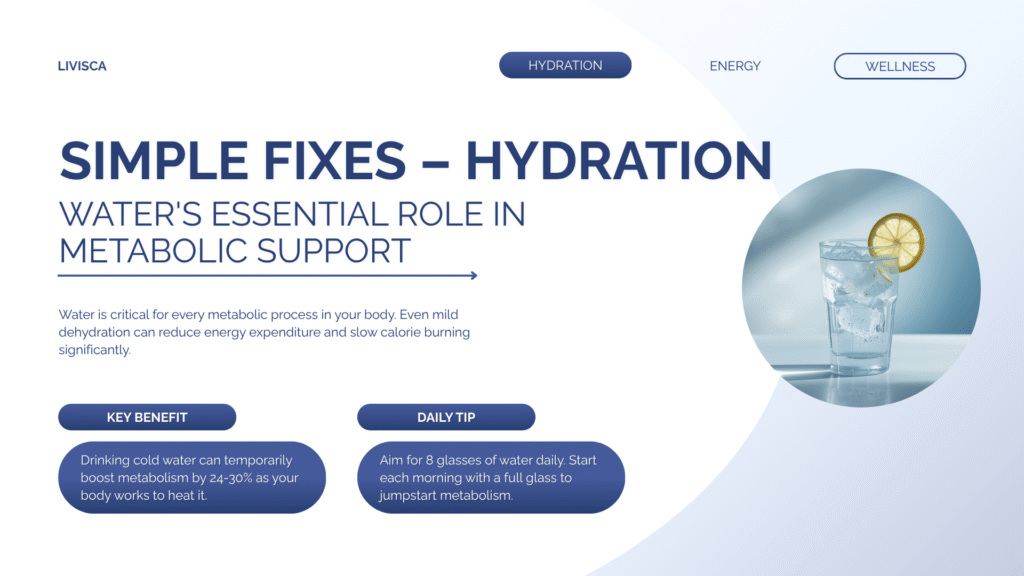
This one sounds almost too simple, but dehydration really does slow things down. We noticed fatigue and headaches on days we didn’t drink enough water. And sometimes, what felt like hunger was just dehydration. Among the Simple Fixes for Slow Metabolism Naturally, this is probably the easiest to start. Warm fluids, especially in the morning or between meals, helped digestion feel smoother. Even small habits like keeping a bottle nearby made a difference.
Natural Ways to Increase Metabolism Daily
We realized metabolism isn’t something you “fix” once—it’s shaped by daily habits. That’s why Simple Fixes for Slow Metabolism Naturally work best when they’re part of routine life. Small things like morning stretches, short walks, or even standing while working helped more than expected. It’s not about intensity, but frequency. These little actions keep the body active throughout the day. And over time, they build momentum.
Incorporate Strength Training and Daily Activity
We used to rely only on cardio, but adding basic strength training changed things. It doesn’t have to be heavy lifting—even bodyweight exercises help. Muscle supports metabolism, which we kind of overlooked before. So this became one of our go-to Simple Fixes for Slow Metabolism Naturally. Along with that, just staying active during the day mattered equally. Taking stairs, walking during calls—small things, but consistent.
Optimize Sleep and Reduce Stress Naturally
Fixing sleep isn’t always easy, but improving it even slightly made a difference. We started winding down earlier, avoiding late meals, and cutting back on screens. Stress, though, is ongoing—but managing it helps. Deep breathing, quiet time, even something as simple as herbal tea in the evening made things feel calmer. That’s where Simple Fixes for Slow Metabolism Naturally feel more realistic—not perfect, just better.
Herbal Solutions to Support Metabolism
We were a bit skeptical about herbal support at first, but some things actually helped. Not as magic solutions, but as gentle support alongside other habits. That’s how we see Simple Fixes for Slow Metabolism Naturally—layered, not dependent on one thing. Herbal teas, especially, felt like an easy addition to daily routine.
Benefits of Herbal Tea for Digestion and Fat Burn
A warm cup after meals helped with bloating and that heavy feeling we used to get. It’s subtle, but noticeable over time. Herbal blends support digestion, which indirectly supports metabolism too. Among the Simple Fixes for Slow Metabolism Naturally, this one felt calming and sustainable.
Why Livisca Herbal Tea Supports Natural Metabolism Boost
We tried Livisca Herbal Tea during a phase when nothing seemed to work consistently, and it actually fit in well. Not as a quick fix, but as a daily support. It helped with digestion, reduced that sluggish feeling after meals, and made hydration easier. That’s why we include it in our Simple Fixes for Slow Metabolism Naturally—it’s practical, not overwhelming.
How to Maintain a Healthy Metabolism Long-Term Naturally
Keeping metabolism steady is less about big changes and more about what we do daily. That’s where Simple Fixes for Slow Metabolism Naturally really matter—consistency over intensity. We’ve learned that falling off routine happens, and that’s okay. What matters is getting back to it without overcorrecting.
Build Sustainable Habits for Long-Term Results
Sustainability matters more than speed. We’ve tried quick results before—they didn’t last. That’s why Simple Fixes for Slow Metabolism Naturally focus on habits that feel doable long-term. Small, repeatable actions work better than strict plans.
Consistency in Diet and Physical Activity
We don’t get it right every day, but staying mostly consistent helped more than being perfect occasionally. Regular meals, regular movement—it adds up. That’s one of the most underrated Simple Fixes for Slow Metabolism Naturally.
Avoiding Crash Diets and Metabolic Damage
Crash diets slowed everything down for us, even when they “worked” short term. The body adapts quickly, often by conserving energy. That’s why we avoid extremes now. Sustainable eating feels slower, but it’s steadier.
When to Seek Professional Guidance
Sometimes, despite trying everything, things don’t improve—and that’s okay to acknowledge. Simple Fixes for Slow Metabolism Naturally help, but they’re not a cure-all. If something feels off consistently, it’s worth looking deeper.
Identifying Underlying Health Conditions
Issues like thyroid imbalance or hormonal changes can affect metabolism more than lifestyle alone. We’ve seen cases where effort wasn’t the issue—underlying health was. Recognizing that matters.
Getting Personalized Nutrition Advice
Generic advice doesn’t always work for everyone. Getting guidance tailored to your body can make things clearer. It’s not about doing more, just doing what fits better.
