

If we’re being honest, most of us don’t even realize how messy our sleep has become until things start slipping—energy dips, mood swings, random headaches, that weird tired-but-awake feeling at night. When we say Sleep Cycle Is Destroying Your Health, it’s not about one bad night or staying up late once. It’s the pattern. The inconsistency. The way our body clock gets confused because we sleep at 11 one day, 2 AM the next, and then try to “fix it” on Sunday. It slowly chips away at how our body functions. Hormones don’t align, digestion gets weird, and even motivation drops. It’s frustrating because we think we’re resting, but we wake up feeling like we didn’t. That’s usually the point where we start Googling solutions, but the real issue isn’t just sleep duration—it’s rhythm, timing, and how broken that internal system has become.
Understanding the Science Behind Your Sleep Cycle
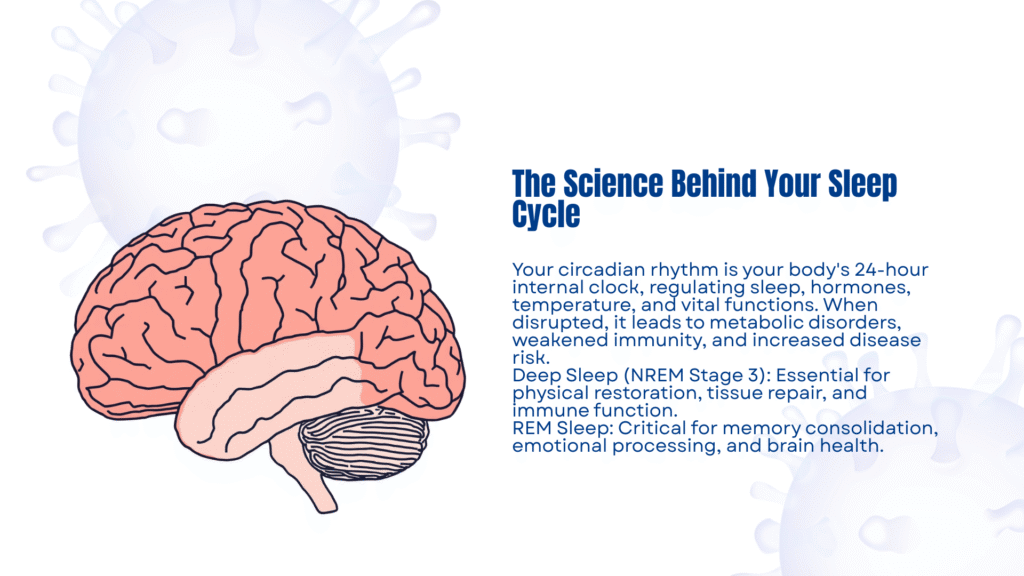
Our body actually runs on a kind of built-in schedule, whether we respect it or not. There’s a natural loop of sleeping, waking, repairing, and resetting happening every 24 hours. When we ignore it—late-night scrolling, binge-watching, random naps—we throw that system off balance. The body still tries to follow its routine, but we keep interrupting it. That’s where things start feeling off. It’s not just about feeling sleepy; it’s about how deeply we sleep and when. If we keep pushing sleep later and later, our body doesn’t get the signals it expects. Over time, this mismatch becomes exactly why Sleep Cycle Is Destroying Your Health, even if we think we’re getting “enough” hours. It’s not just sleep—it’s timed sleep that matters more than we realize.
Circadian Rhythm and Its Role in Health
Our circadian rhythm is like an internal alarm system that doesn’t use sound—it uses light, darkness, and habits. It tells us when to feel alert, when to wind down, and when to sleep deeply. But here’s the problem: modern life completely ignores it. Bright screens at night, artificial lighting, irregular schedules—it all confuses this rhythm. When that happens, our body starts releasing sleep hormones at the wrong time. We feel sleepy during the day and wired at night. It’s a strange cycle, and once it starts, it doesn’t fix itself easily. That’s when we start noticing how Sleep Cycle Is Destroying Your Health in subtle ways—like waking up tired even after 8 hours. The rhythm is there, but it’s completely out of sync.
Sleep Stages: REM vs Deep Sleep Explained
Not all sleep is equal, and that’s something we usually ignore. We go to bed, close our eyes, and assume rest is happening. But sleep has layers—light sleep, deep sleep, and REM. Deep sleep is where physical repair happens, while REM is tied to memory and mental reset. If our sleep timing is off, we don’t get enough of these critical stages. We might technically sleep for hours but still miss out on the restorative parts. That’s why we wake up groggy or mentally slow. When these stages are constantly disrupted, it becomes clearer how Sleep Cycle Is Destroying Your Health, because the body isn’t getting what it actually needs—it’s just going through the motions.
Early Warning Signs Your Sleep Cycle Is Damaging Your Health
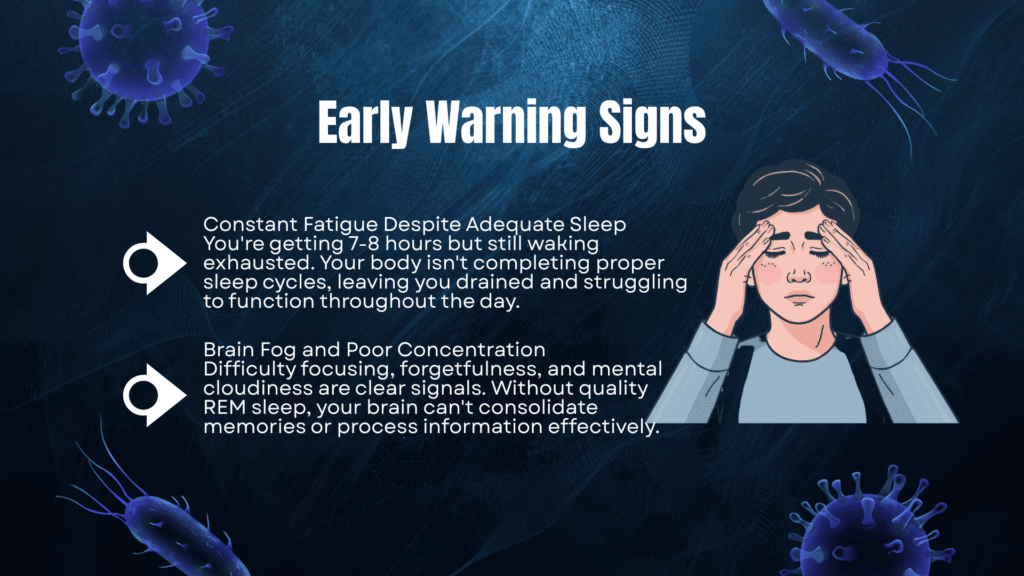
The tricky part is that the signs don’t always feel dramatic at first. It starts small—needing more coffee, feeling slightly irritated, forgetting little things. We brush it off as stress or workload. But these are often early signals that something’s off with our sleep. Over time, they stack up. Suddenly, we’re tired even after weekends, struggling to focus, or feeling oddly emotional for no clear reason. That’s usually when it hits us that Sleep Cycle Is Destroying Your Health, not in one big moment, but in a series of small, frustrating patterns that just won’t go away.
Constant Fatigue and Low Energy
You know that feeling when you wake up and already feel tired? That’s not normal, even though many of us accept it as routine. When our sleep cycle is off, the body doesn’t fully recharge overnight. It’s like charging your phone with a faulty cable—it looks plugged in, but the battery never fills properly. Throughout the day, energy dips hit harder, and even simple tasks feel heavier. This isn’t laziness or lack of motivation. It’s a direct result of disrupted sleep patterns. Over time, this constant fatigue becomes one of the clearest signs that Sleep Cycle Is Destroying Your Health, even if we try to push through it.
Brain Fog and Poor Concentration
There are days when focusing feels almost impossible. We reread the same sentence multiple times or forget what we were about to do. That mental fog isn’t random—it’s often tied to poor sleep quality. When our brain doesn’t get enough REM sleep, it struggles to process and store information properly. Decisions feel harder, and productivity drops without any obvious reason. It’s frustrating because we’re trying, but our brain just won’t cooperate. That’s another way Sleep Cycle Is Destroying Your Health, by quietly affecting how sharp and clear we feel every day.
Mood Swings and Irritability
Sleep and mood are more connected than we usually admit. When we’re sleep-deprived or sleeping at odd hours, emotional control becomes harder. Small things start to feel overwhelming, and patience runs thin. We might snap at people or feel unusually low without knowing why. It’s not just stress—it’s the lack of proper rest affecting how our brain regulates emotions. Over time, this instability becomes part of daily life, which is a strong indicator that Sleep Cycle Is Destroying Your Health in ways that go beyond just physical tiredness.
Top Reasons Why Your Sleep Cycle Is Destroying Your Health
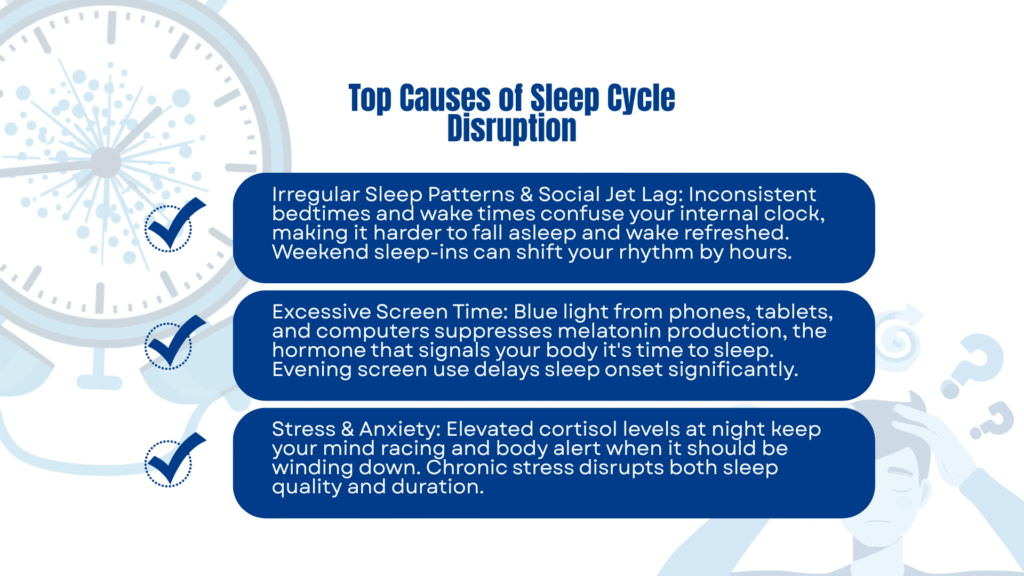
We often assume poor sleep is just about bad habits, but it’s usually a mix of lifestyle, stress, and small daily choices that add up. Late nights, inconsistent schedules, and constant screen exposure slowly disrupt our natural rhythm. It’s not one big mistake—it’s repeated patterns. And once those patterns settle in, they’re hard to break. That’s when we start noticing how Sleep Cycle Is Destroying Your Health, not because of one bad decision, but because of habits we didn’t think mattered much.
Irregular Sleep Patterns and Late-Night Habits
We’ve all done it—stayed up late scrolling, watching “just one more” episode, or working past midnight. The problem isn’t occasional nights; it’s when it becomes routine. Sleeping at different times every day confuses the body. It doesn’t know when to release sleep hormones or when to wake us up naturally. This inconsistency builds up over time, making it harder to fall asleep even when we try. That’s where the cycle starts breaking down, leading to the realization that Sleep Cycle Is Destroying Your Health more than we expected.
The Impact of Sleeping at Different Times Daily
Going to bed at wildly different times each night might feel harmless, but it creates internal chaos. The body thrives on predictability, and without it, sleep becomes shallow and inconsistent. We might fall asleep quickly one night and struggle the next. This unpredictability makes it harder to get restorative sleep. Over time, the body stops trusting our schedule altogether, which is another reason Sleep Cycle Is Destroying Your Health without us noticing immediately.
Weekend Sleep Disruptions (“Social Jet Lag”)
Weekends feel like a chance to “catch up” on sleep, but they often make things worse. Sleeping late and waking up at noon shifts our internal clock, making Monday mornings brutal. It’s like traveling across time zones without leaving home. This constant shift between weekday and weekend sleep schedules creates what’s called social jet lag. And yes, it’s a big reason why Sleep Cycle Is Destroying Your Health, even if we think we’re recovering.
Excessive Screen Time Before Bed
Let’s be real—most of us are on our phones right until we fall asleep. It feels relaxing, but it’s actually doing the opposite. Screens emit blue light, which tricks our brain into thinking it’s still daytime. This delays the release of melatonin, the hormone that helps us sleep. Even if we feel tired, our brain stays alert. This habit alone is enough to disrupt sleep patterns significantly, showing us how Sleep Cycle Is Destroying Your Health through something as simple as late-night scrolling.
Blue Light and Melatonin Suppression
Blue light exposure at night interferes with the body’s natural signals. Instead of preparing for sleep, the brain stays active. Melatonin production drops, making it harder to fall asleep naturally. We might end up lying in bed, tired but awake, wondering why sleep isn’t coming. Over time, this pattern becomes normal, even though it’s not healthy. It’s one of the clearest examples of how Sleep Cycle Is Destroying Your Health quietly.
How Devices Disrupt Your Natural Sleep Cycle
It’s not just the light—it’s the content too. Social media, emails, videos—they all keep the brain engaged. Instead of winding down, we’re stimulating our mind right before sleep. This makes it harder to relax and transition into deep sleep. Even after putting the phone down, the brain stays active longer. This constant stimulation is another reason why Sleep Cycle Is Destroying Your Health, even if we don’t immediately connect the dots.
Stress, Anxiety, and Overthinking at Night
Sometimes the problem isn’t habits—it’s what’s happening in our mind. Lying in bed, replaying conversations, worrying about tomorrow, thinking about everything at once. Stress doesn’t just disappear when we try to sleep. It follows us into bed. And when that happens regularly, it becomes harder to fall asleep and stay asleep. This mental overload is a major reason Sleep Cycle Is Destroying Your Health, especially for people who’ve “tried everything” but still can’t sleep well.
Cortisol’s Role in Sleep Disruption
Cortisol, the stress hormone, is supposed to be low at night. But when we’re stressed or anxious, it stays high. This keeps the body alert when it should be relaxing. Even if we’re physically tired, mentally we’re still switched on. That imbalance makes falling asleep harder and reduces sleep quality. Over time, this becomes a cycle that reinforces itself, showing again how Sleep Cycle Is Destroying Your Health.
Mental Health and Sleep Connection
Sleep and mental health are deeply connected. Poor sleep can worsen anxiety, and anxiety can worsen sleep—it goes both ways. When this loop continues, it becomes difficult to break. We might feel stuck, trying different solutions without success. That’s when it becomes clear that Sleep Cycle Is Destroying Your Health on both mental and emotional levels, not just physical.
How to Fix a Sleep Cycle That Is Destroying Your Health
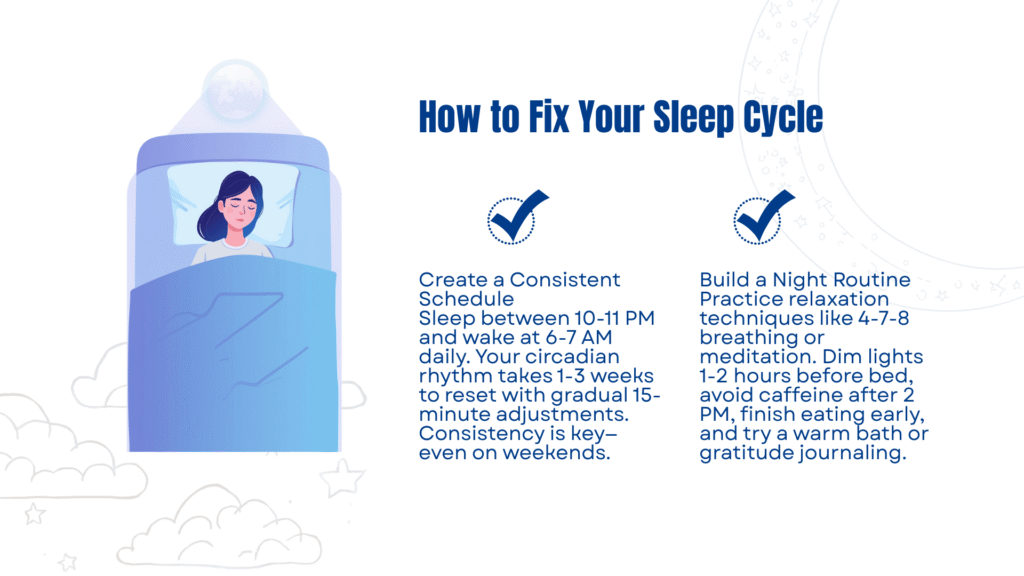
Fixing sleep isn’t about perfection—it’s about consistency and small adjustments that actually stick. We don’t need a complete lifestyle overhaul overnight. Instead, we focus on realistic changes—going to bed at the same time, reducing screen use gradually, creating a wind-down routine. These changes might feel small, but they add up. Over time, they help reset the body’s natural rhythm and slowly repair what’s been disrupted.
Create a Consistent Sleep Schedule
Consistency is more powerful than we think. Going to bed and waking up at the same time every day—even on weekends—helps the body rebuild its rhythm. It might feel difficult at first, especially if our current schedule is chaotic. But sticking to a routine trains the body to expect sleep at a certain time. That’s where real improvement begins, reversing how Sleep Cycle Is Destroying Your Health.
Ideal Sleep Timing Based on Your Body Clock
Everyone’s body clock is slightly different, but most of us function best with sleep between 10 PM and 7 AM. The key is finding a schedule that feels natural and sticking to it. It’s not about forcing early sleep—it’s about aligning with what works consistently. Once we do that, sleep becomes easier and more refreshing.
How Long It Takes to Reset Your Sleep Cycle
Resetting sleep isn’t instant. It usually takes a couple of weeks of consistent habits to see real change. The first few days might feel rough, but that’s normal. The body is adjusting. Over time, falling asleep becomes easier, and waking up feels less painful.
Build a Night Routine That Improves Sleep Quality
A proper night routine doesn’t need to be complicated. It’s about signaling the body that it’s time to wind down. Simple things like dimming lights, avoiding screens, or even sitting quietly can help. These habits create a transition from a busy day to restful sleep.
Relaxation Techniques Before Bed
Breathing exercises, light stretching, or even just sitting without distractions can help calm the mind. It doesn’t have to be perfect—just consistent. These small actions tell the body it’s safe to relax and prepare for sleep.
Best Pre-Sleep Habits for Deep Sleep
Avoid heavy meals, reduce caffeine late in the day, and limit screen exposure before bed. These habits might seem basic, but they make a noticeable difference over time.
Optimize Your Sleep Environment for Better Health
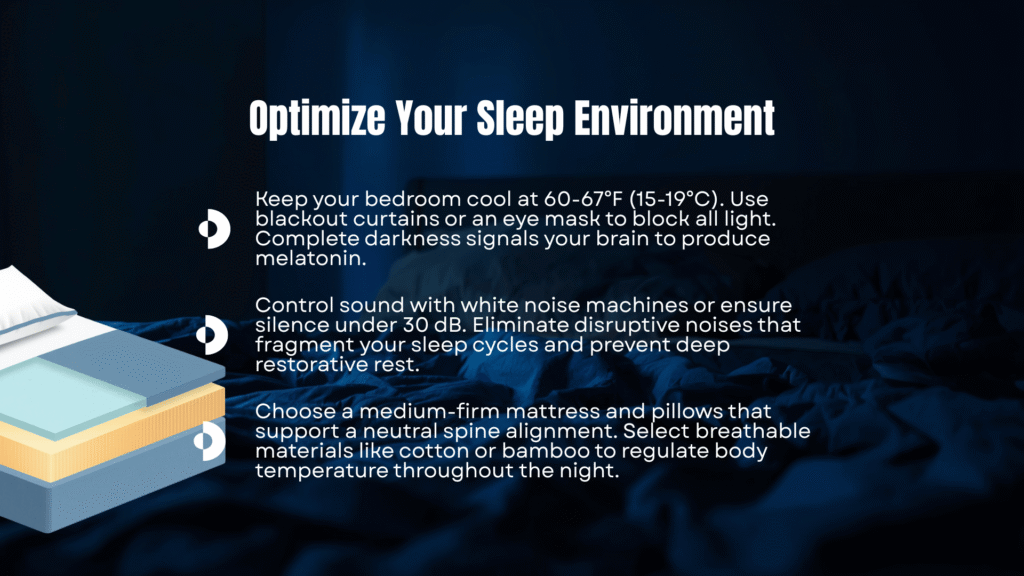
Sometimes the issue isn’t us—it’s our environment. A noisy room, uncomfortable mattress, or too much light can disrupt sleep without us realizing it. Fixing these small details can improve sleep quality more than expected.
Ideal Room Temperature, Light, and Noise
A cool, dark, and quiet room is ideal for sleep. Even small adjustments—like blackout curtains or reducing noise—can make a big difference.
Choosing the Right Mattress and Pillow
Comfort matters more than we think. An unsupportive mattress or pillow can affect sleep quality and cause discomfort, leading to restless nights.
FAQs About How Your Sleep Cycle Is Destroying Your Health
Can a bad sleep cycle really affect long-term health?
Yes, and not in a dramatic overnight way, which is why many of us ignore it. When we consistently sleep at irregular hours or get poor-quality rest, the body doesn’t recover properly. Over time, this affects metabolism, immunity, mood stability, and even heart health. It builds slowly, almost unnoticed, until it becomes part of daily life. That’s why understanding how Sleep Cycle Is Destroying Your Health early can actually prevent bigger issues later. It’s not about fear—it’s about awareness. Fixing sleep patterns now is much easier than dealing with long-term consequences later.
How many hours of sleep do you actually need?
Most adults need somewhere between 7 to 9 hours, but it’s not just about the number. We’ve all slept 8 hours and still felt exhausted. That’s because timing and quality matter just as much. If sleep is fragmented or misaligned with our natural rhythm, those hours don’t fully count. It’s better to focus on consistent, uninterrupted sleep rather than chasing a specific number. Once we fix the pattern, the hours start working for us instead of against us.
How quickly can you repair a damaged sleep cycle?
It depends on how long the pattern has been off, but most people start noticing changes within 1 to 2 weeks of consistent effort. The key is sticking to a routine, even when it feels difficult at first. There’s no instant fix, but small, steady changes make a real difference. Over time, the body resets itself naturally. And that’s when we finally feel the shift—from struggling with sleep to actually waking up refreshed.
