

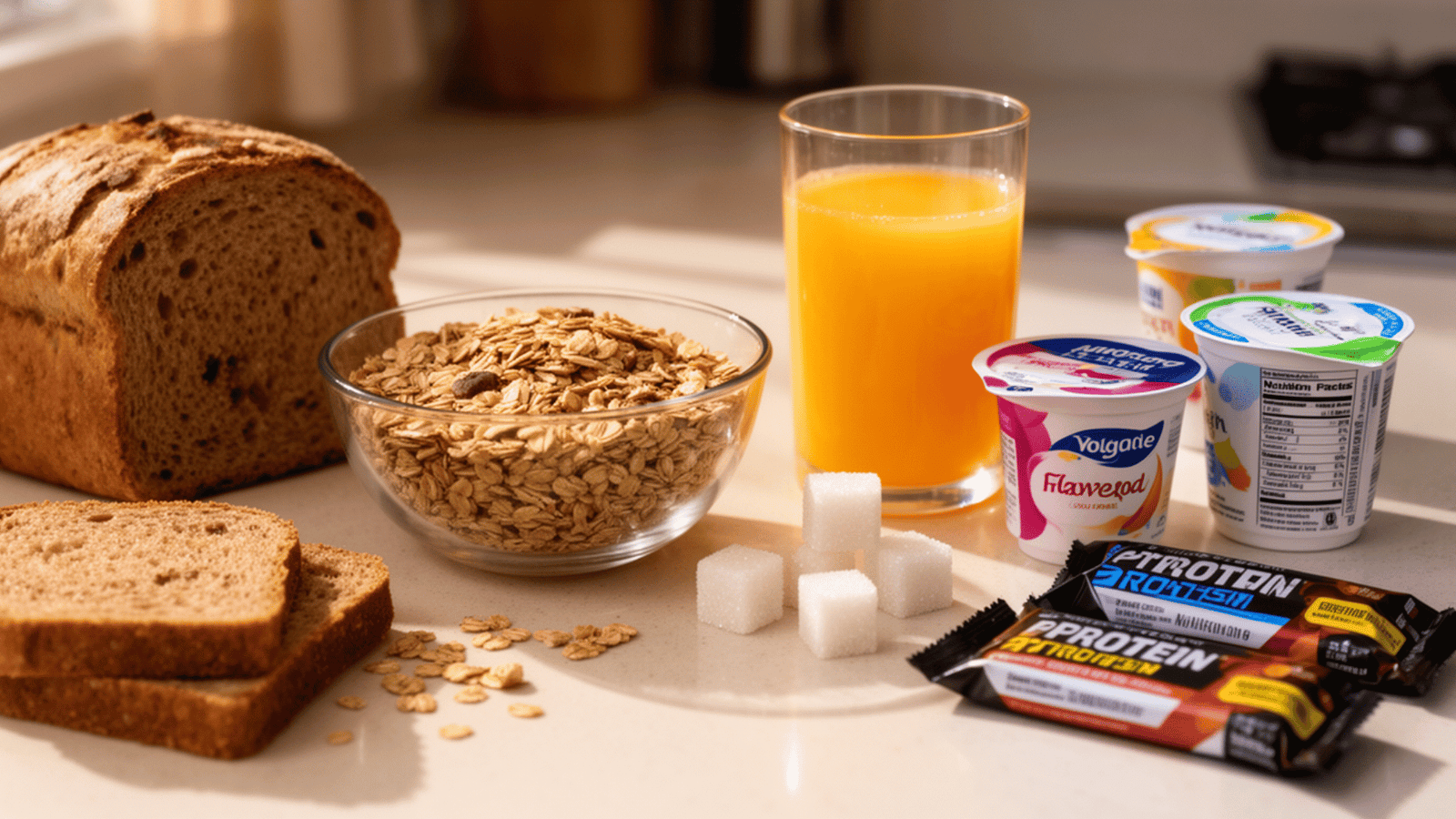
We’ve all been there—trying to eat clean, picking what looks like the “right” option, and still feeling like something’s off. That’s where Foods That Look Healthy but Harm Your Body Daily quietly fit into our lives. These hidden unhealthy foods aren’t obvious junk; they’re the ones sitting in our kitchen right now—brown bread, granola, fruit juice. The problem is, many of these are foods that seem healthy but aren’t, shaped by marketing more than actual nutrition. Over time, these misleading diet choices become part of our routine, turning into subtle daily eating mistakes. We don’t notice the impact immediately, which makes it even trickier. And honestly, it’s frustrating—we’re putting in effort, but not getting the results we expected. This isn’t about cutting everything out or chasing perfection. It’s about understanding where we’ve been slightly misled and making small, more informed swaps that actually support our health without overcomplicating things. Healthy” Foods
“Healthy” Foods That May Be Secretly Unhealthy (And Why)
Some foods wear a “healthy” label so convincingly that we rarely question them. But when we look a little closer, many of these fall under processed “health” foods that aren’t as clean as they appear. These hidden unhealthy foods often contain added sugars, refined ingredients, or preservatives that don’t align with what we thought we were choosing. It’s not always obvious—we’re talking about everyday items we trust. Over time, these misleading diet choices quietly stack up, shaping our daily eating mistakes without us realizing it. We might feel low on energy or stuck in a cycle of cravings and not connect it back to these foods. That disconnect is common. Once we understand the “why” behind these foods, things start to make more sense, and we can make choices that feel less confusing and more intentional.
Is Brown Bread Really Healthy or Just Marketed That Way?
Brown bread is one of those staples many of us switched to thinking we were making a better choice. But here’s the catch—it often falls into the category of foods that seem healthy but aren’t. A lot of packaged brown bread is still made with refined flour, just colored to look healthier. That’s where hidden unhealthy foods become tricky—they don’t look harmful. We trust the label, not realizing it may be a processed “health” food in disguise. This turns into one of those subtle daily eating mistakes we repeat without questioning. It doesn’t mean all brown bread is bad, but we’ve learned the hard way that not all of it is what it claims to be. Once we start checking what’s actually inside, the picture changes pretty quickly.
Difference Between Whole Wheat vs Multigrain vs Brown Bread
We often assume multigrain or brown bread automatically means healthier, but that’s not always true. Whole wheat usually means the grain is intact, while multigrain just means multiple grains are present—not necessarily unprocessed. Brown bread, on the other hand, can simply be white bread with coloring. These distinctions matter because they separate genuinely nourishing food from misleading diet choices. Many of these options fall into processed “health” foods, which look better than they are. It’s one of those daily eating mistakes we don’t question because the packaging feels convincing. Once we understand the difference, it becomes easier to spot hidden unhealthy foods and choose more wisely without overthinking every grocery trip.
Hidden Sugar and Refined Flour in Packaged Bread
One thing we rarely check in bread is sugar—but it’s often there, quietly added. Along with that, refined flour is still a base ingredient in many “healthy” breads. This combination turns something simple into one of those foods that seem healthy but aren’t. These hidden unhealthy foods don’t cause instant harm, but over time, they contribute to energy crashes and cravings. It’s a classic example of how misleading diet choices shape our routine. We think we’re making progress, but small ingredients tell a different story. Noticing these patterns helps us step away from daily eating mistakes without feeling overwhelmed or restrictive.
Are Fruit Juices Actually Bad If Consumed Daily?
Fruit juice feels like one of the safest choices we can make, especially when we’re trying to avoid sugary drinks. But surprisingly, it often falls into foods that seem healthy but aren’t. Even fresh juice lacks the fiber that whole fruit provides, and packaged versions can be loaded with added sugars. These are classic hidden unhealthy foods—they don’t raise suspicion. Over time, drinking juice daily becomes one of those daily eating mistakes that affects energy levels and sugar balance. It’s not about cutting juice out completely, but understanding how often and how much actually works for our body. That awareness alone can shift things in a more balanced direction.
Juice vs Whole Fruit: Fiber Loss and Sugar Spike Explained
When we drink juice, we’re mostly getting sugar without the fiber that slows digestion. Whole fruit, on the other hand, keeps things balanced. Without fiber, juice can spike blood sugar quickly, making it one of those misleading diet choices. It’s easy to overlook because it still comes from fruit. But this is how processed “health” foods behave—they simplify something natural and lose the benefits along the way. Many of us didn’t realize this at first, which is why it turns into a repeated daily eating mistake. Small awareness here can make a big difference without forcing major changes.
Packaged Juice vs Fresh Juice: Which Is Worse?
Packaged juice often contains preservatives, added sugar, and flavor enhancers, making it more of a processed “health” food than a natural option. Fresh juice is slightly better, but still lacks fiber. Both can fall into foods that seem healthy but aren’t if consumed daily without thought. These hidden unhealthy foods are convenient, which is why we rely on them. Over time, though, this habit becomes one of those unnoticed daily eating mistakes. Choosing whole fruit more often or limiting juice intake can bring a more balanced approach without feeling restrictive.
Is Granola Always a Healthy Breakfast Option?
Granola has built a strong reputation as a healthy breakfast, but not all of it lives up to that image. Many store-bought versions are loaded with sugar, oils, and additives, turning them into processed “health” foods. This makes them one of those foods that seem healthy but aren’t. We often pour a bowl thinking we’re starting the day right, without realizing how calorie-dense it is. Over time, this becomes one of those quiet daily eating mistakes. It’s not that granola is bad—it just depends on what’s inside and how much we’re eating. Once we pay attention, it’s easier to keep it balanced.
Added Sugars and Oils in Store-Bought Granola
Many granolas contain honey, syrups, or oils to enhance taste, which adds up quickly. These ingredients turn a simple mix into hidden unhealthy foods. It’s easy to miss because the base ingredients—oats and nuts—sound healthy. But this is how misleading diet choices work; they highlight the good and hide the rest. Over time, these small additions shape our daily eating mistakes. Being aware of these extras helps us choose better versions or control portions more mindfully.
Portion Size Mistakes That Make Granola Unhealthy
Even when granola is relatively clean, portion size can be tricky. It’s dense, so a small serving goes a long way—but we rarely stop there. This turns a decent option into one of those foods that seem healthy but aren’t. These hidden unhealthy foods become part of our routine simply because we don’t measure or think twice. It’s one of those subtle daily eating mistakes that adds up over time. Adjusting portions doesn’t feel restrictive—it just brings awareness to what we’re actually consuming.
Everyday “Healthy” Foods That Can Harm Your Body Over Time
Some foods don’t cause immediate issues, which is why we trust them for so long. But over time, certain processed “health” foods can slowly affect how we feel. These hidden unhealthy foods often become part of our daily routine, making them harder to question. We assume consistency equals safety, but that’s not always the case. These misleading diet choices build up quietly, contributing to fatigue, cravings, or lack of progress. It’s not dramatic—it’s gradual. Recognizing these patterns helps us shift away from repeated daily eating mistakes without needing extreme changes.
Why Low-Fat or Fat-Free Foods Can Backfire
Low-fat sounds like a smart choice, but it often leads to unexpected trade-offs. When fat is removed, sugar and additives are usually added to maintain taste. This turns these products into processed “health” foods that don’t really support our goals. They fall into foods that seem healthy but aren’t, and we end up consuming more than we realize. These hidden unhealthy foods often leave us less satisfied, leading to more snacking. Over time, this becomes one of those common daily eating mistakes. Understanding this helps us look beyond labels and focus on what actually nourishes us.
How Sugar Replaces Fat in Processed Foods
To keep flavor intact, manufacturers often replace fat with sugar or starches. This creates a product that tastes good but behaves differently in the body. It’s a classic example of misleading diet choices. These processed “health” foods don’t keep us full, which can lead to overeating. Many of us didn’t realize this at first—it’s one of those daily eating mistakes that feels harmless. Seeing this pattern makes it easier to rethink what “low-fat” really means.
Impact on Metabolism and Hunger Levels , Foods That Look Healthy but Harm Your Body Daily
Foods high in added sugar but low in fat can disrupt hunger signals. We feel full for a short time, then hungry again quickly. This cycle turns into one of those hidden unhealthy foods patterns that affects daily life. It’s subtle, but it adds up. These misleading diet choices don’t support steady energy, which is what most of us are actually looking for. Recognizing this helps us move away from repeated daily eating mistakes toward more balanced options.
Are Protein Bars and Energy Bars Really Good for You?
Protein bars seem like the perfect on-the-go solution, especially when we’re busy. But many of them fall into processed “health” foods with long ingredient lists. They often contain syrups, artificial flavors, and preservatives, making them foods that seem healthy but aren’t. These hidden unhealthy foods are convenient, which is why we rely on them. Over time, though, this turns into one of those daily eating mistakes that’s easy to overlook. Not all bars are bad, but understanding what’s inside helps us choose better or limit how often we reach for them.
Hidden Syrups, Preservatives, and Artificial Ingredients
A quick glance at the ingredient list often reveals more than we expect—glucose syrup, stabilizers, and additives. These turn a simple snack into one of those misleading diet choices. It’s easy to miss because the front label focuses on protein. These processed “health” foods don’t always deliver what we think they do. Over time, this becomes a repeated daily eating mistake. Paying attention here can help us avoid unnecessary extras.
When Protein Bars Become Candy Bars
Some protein bars are closer to candy than actual nutrition. High sugar content and flavoring make them taste great, but that’s part of the problem. They fall into foods that seem healthy but aren’t, especially when eaten daily. These hidden unhealthy foods create a false sense of security. We think we’re making a good choice, but the impact tells a different story. Recognizing this helps us break out of that pattern without cutting them out completely.
Is Eating Flavored Yogurt Daily Bad for Health?
Flavored yogurt feels like a safe, everyday option—light, convenient, and tasty. But many versions contain added sugars and flavorings that turn them into processed “health” foods. This makes them one of those foods that seem healthy but aren’t. These hidden unhealthy foods are easy to trust because yogurt itself is healthy. Over time, though, this becomes one of those unnoticed daily eating mistakes. Choosing plain yogurt and adding fresh fruit can make a noticeable difference without complicating things.
Sugar Content vs Plain Yogurt Comparison
Flavored yogurt often contains significantly more sugar than plain yogurt. This shifts it from a healthy snack to a misleading diet choice. It’s not obvious unless we check the label. These processed “health” foods rely on taste to win us over. Over time, this habit becomes one of those daily eating mistakes that’s easy to repeat. Small swaps here can go a long way.
How “Fruit Yogurt” Misleads Consumers
“Fruit yogurt” sounds natural, but often includes fruit flavoring rather than real fruit. This makes it one of those foods that seem healthy but aren’t. These hidden unhealthy foods rely on perception more than reality. It’s a subtle form of misleading diet choices that many of us fall for. Once we notice it, it’s easier to make a better call without overthinking.
How to Identify Truly Healthy Foods vs Misleading Labels
At some point, we realize it’s not just about the food—it’s about how it’s presented to us. Labels can be convincing, but they don’t always tell the full story. Learning to spot hidden unhealthy foods means going beyond front packaging. Many processed “health” foods are designed to look better than they are. These misleading diet choices become part of our routine simply because we trust what we see. Over time, this leads to repeated daily eating mistakes. The good part is, once we know what to look for, things become much clearer and less frustrating.
How to Read Nutrition Labels Without Getting Misled
Reading labels isn’t something most of us were taught, so it can feel confusing at first. But it’s one of the most useful ways to avoid hidden unhealthy foods. Instead of focusing on bold claims, we start looking at ingredients and sugar content. Many processed “health” foods reveal their true nature there. These misleading diet choices become easier to spot once we know where to look. Over time, this reduces daily eating mistakes without requiring strict rules.
Common Marketing Terms That Trick Consumers (“Natural”, “Low-Calorie”)
Words like “natural” or “low-calorie” sound reassuring, but they don’t always mean healthy. These terms often mask processed “health” foods. It’s a subtle way misleading diet choices show up in our lives. These hidden unhealthy foods rely on these labels to gain trust. Once we question them, it becomes easier to make more informed decisions and avoid repeated daily eating mistakes.
Understanding Ingredient Lists and Hidden Additives
Ingredient lists tell a more honest story than marketing claims. Long lists with unfamiliar names often point to processed “health” foods. These are usually foods that seem healthy but aren’t. Many of these hidden unhealthy foods include additives we don’t really need. Recognizing them helps us move away from misleading diet choices and reduce everyday confusion around food.
What Are Better Alternatives to These “Fake Healthy” Foods?
Once we identify the problem, the next step is finding realistic alternatives. This isn’t about replacing everything overnight—it’s about small, doable shifts. Swapping hidden unhealthy foods for simpler options can make a difference over time. Many processed “health” foods have easy alternatives that feel more natural. These changes help us move away from misleading diet choices without feeling restricted. It’s about building habits that actually support us instead of adding more confusion.
Healthier Swaps for Bread, Juice, Snacks, and Breakfast Foods
Switching to whole wheat bread, eating whole fruits instead of juice, or choosing nuts over packaged bars are small but practical steps. These swaps reduce reliance on processed “health” foods. They help us avoid foods that seem healthy but aren’t without overcomplicating things. Over time, these changes replace daily eating mistakes with more balanced habits.
Simple Daily Diet Changes for Long-Term Health
Simple changes—like checking labels, reducing packaged foods, or watching portions—go a long way. These steps help us move away from hidden unhealthy foods. They don’t require perfection, just consistency. Over time, they reduce misleading diet choices and build a more stable routine. That’s what actually supports long-term health.
How Often Is It Safe to Consume These Foods Without Harm?
The goal isn’t to eliminate everything—it’s to find balance. Most foods that seem healthy but aren’t can still be enjoyed occasionally. The issue starts when they become daily habits. These hidden unhealthy foods are fine in moderation, but repeated use turns into daily eating mistakes. Understanding frequency helps us stay flexible without losing awareness.
Moderation Guidelines Backed by Nutrition Experts
Experts often suggest treating these foods as occasional choices rather than staples. This reduces reliance on processed “health” foods. It helps us avoid misleading diet choices without strict rules. Balance, not restriction, is what keeps things sustainable.
Signs Your “Healthy Diet” Might Be Hurting You
If we feel low on energy, constantly hungry, or not seeing progress, it might be worth rechecking our “healthy” choices. These signs often point to hidden unhealthy foods in our routine. Many foods that seem healthy but aren’t quietly affect how we feel. Recognizing this helps us step away from repeated daily eating mistakes and move toward something more reliable.


