


Herbal tea has been celebrated for centuries as a natural way to improve health and well-being. Rich in antioxidants, vitamins, and minerals, herbal tea supports immunity, aids digestion, reduces stress, and enhances mental clarity. Drinking herbal tea daily is a simple, natural approach to maintaining overall wellness while enjoying soothing flavors.
Herbal teas, unlike traditional caffeinated teas, are made from leaves, roots, flowers, or seeds of various plants. This diversity allows for a wide range of health benefits, from calming effects to digestive support, making it a versatile addition to any lifestyle.
How Does Herbal Tea Support Overall Health and Wellness?

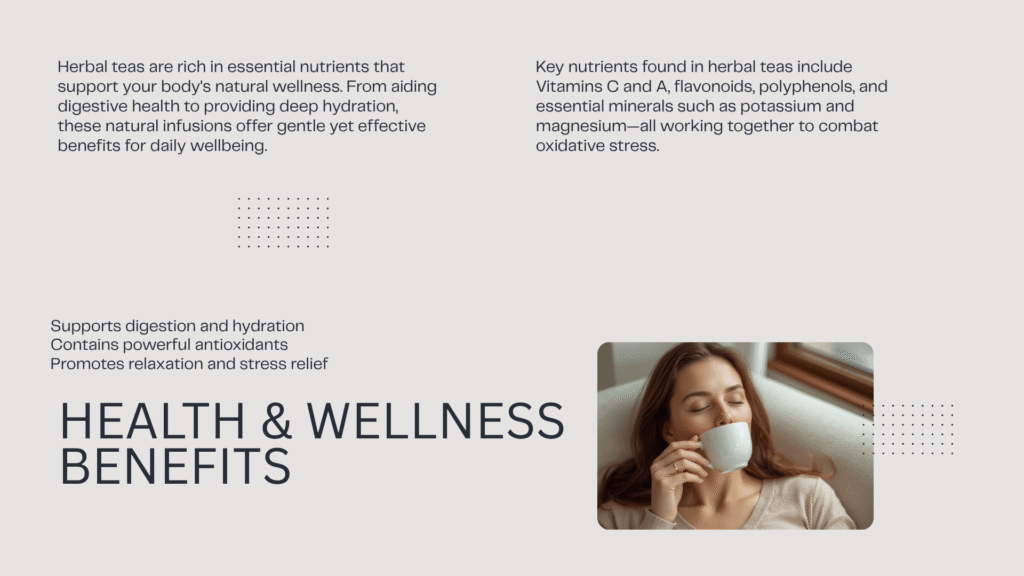
Herbal tea boosts overall health by providing antioxidants, supporting immune function, and promoting relaxation. Regular consumption reduces inflammation, aids digestion, and enhances mental clarity, making it an essential part of a natural wellness routine.
Detailed Explanation:
The holistic health benefits of herbal tea stem from its bioactive compounds:
- Antioxidants Combat Free Radicals
Herbal teas contain flavonoids and polyphenols that neutralize harmful free radicals, protecting cells from damage and slowing signs of aging. - Immune System Support
Ingredients like ginger, echinacea, and hibiscus strengthen immunity, helping prevent colds, infections, and inflammation-related illnesses. - Digestive Health
Peppermint, fennel, and chamomile teas soothe the digestive tract, reduce bloating, and improve nutrient absorption. - Mental Clarity and Stress Reduction
Chamomile, lavender, and L-theanine-rich teas promote relaxation, reduce anxiety, and support restful sleep. - Anti-Inflammatory Effects
Turmeric and ginger teas combat chronic inflammation, which can lower the risk of cardiovascular disease, arthritis, and other chronic conditions.
How Livisca Herbal Teas Can Enhance Your Daily Wellness Routine
Livisca offers a curated range of premium herbal teas designed to support digestion, immunity, relaxation, and overall wellness. Their blends are made from high-quality, natural ingredients, making it easy to enjoy the benefits of herbal tea every day.
Detailed Explanation:
For anyone looking to embrace the health benefits of herbal tea without compromising on quality or flavor, Livisca provides an excellent solution. Their teas are carefully sourced, focusing on:
- Natural Ingredients: All blends are free from artificial additives, ensuring maximum nutrient retention.
- Variety of Health Benefits: From calming chamomile to metabolism-boosting ginger blends, there’s a tea for every wellness goal.
- Convenience: Easy-to-brew sachets and loose-leaf options make incorporating herbal tea into daily life simple and enjoyable.
Expert Insight: Using Livisca’s herbal teas can complement a holistic lifestyle, enhancing digestion, supporting immunity, and promoting relaxation—key areas where herbal tea truly shines.
Quick Tips for Using Livisca Herbal Tea:
- Start your morning with a ginger or green blend for natural energy.
- Sip peppermint or fennel tea after meals to aid digestion.
- Enjoy chamomile or lavender tea in the evening to relax and unwind.
Explore the full range of Livisca herbal teas here.
| Tea Name | Description | Product Image | Link |
|---|---|---|---|
| Immunity Booster Tea Ayurvedic | Ayurvedic Immunity Booster Tea with herbs and spices to strengthen immunity and support daily wellness. |  | View Product |
| Chamomile Green Tea | Combines soothing chamomile with green tea to promote calm and relaxation. Ideal for evenings. |  | View Product |
| Ashwagandha & Green Tea | A wellness blend combining adaptogenic ashwagandha with energizing green tea. Supports stress balance. |  | View Product |
| Calendula & Green Tea | Gentle herbal infusion with calendula and green tea for calming and skin-friendly effects. |  | View Product |


What Nutrients and Antioxidants Are Found in Herbal Tea?
Herbal tea contains antioxidants, polyphenols, and essential vitamins that support immunity, skin health, and overall vitality. Different herbal teas offer unique compounds targeting specific health benefits.
Detailed Explanation:
The nutrients in herbal teas vary depending on the plant used:
- Chamomile Tea: Contains apigenin, promoting relaxation and sleep.
- Peppermint Tea: Rich in menthol, supporting digestion and easing nausea.
- Hibiscus Tea: High in vitamin C, which strengthens immunity and promotes heart health.
- Ginger Tea: Contains gingerol, providing anti-inflammatory and digestive benefits.
Comparison Table of Popular Herbal Teas and Their Key Nutrients:
| Herbal Tea | Key Nutrients | Primary Health Benefit |
|---|---|---|
| Chamomile | Apigenin, antioxidants | Stress relief, sleep support |
| Peppermint | Menthol, vitamins A & C | Digestion, nausea relief |
| Hibiscus | Vitamin C, polyphenols | Heart health, immune support |
| Ginger | Gingerol, antioxidants | Anti-inflammatory, digestion |
How Can Herbal Tea Boost Your Immune System Naturally?
Herbal tea strengthens immunity through antioxidants, vitamins, and antimicrobial properties. Regular intake of echinacea, ginger, and turmeric teas enhances white blood cell function and helps prevent infections.
Detailed Explanation:
A strong immune system relies on adequate nutrition and antioxidant intake. Herbal teas provide both:
- Echinacea Tea – Stimulates immune cells and reduces cold duration.
- Ginger Tea – Enhances circulation and reduces inflammation.
- Turmeric Tea – Curcumin supports immunity and fights oxidative stress.
- Hibiscus Tea – Vitamin C content boosts white blood cell function.
What Specific Herbal Teas Help With Digestion, Weight, and Energy?
Herbal tea supports digestion, promotes natural energy, and can assist in weight management. Peppermint, ginger, and green herbal blends are especially effective.
Detailed Explanation:
Certain herbal teas are tailored for digestion and metabolism:
- Peppermint Tea – Relieves bloating, cramps, and indigestion.
- Ginger Tea – Stimulates digestion and reduces inflammation in the gut.
- Fennel Tea – Alleviates gas and promotes nutrient absorption.
- Green Herbal Blends – Some herbal teas combined with green tea extracts increase metabolism and natural energy without caffeine jitters.
Step-by-Step Guide to Using Herbal Tea for Digestion and Energy:
- Drink peppermint or fennel tea after meals to ease digestion.
- Incorporate ginger tea in the morning to stimulate metabolism.
- Replace coffee with herbal energy blends to maintain alertness without caffeine crashes.
- Combine teas with a balanced diet for sustainable weight management.
Does Herbal Tea Increase Energy Without Caffeine?
Yes, herbal tea can provide energy naturally through nutrients like B vitamins and adaptogens, without caffeine-related side effects.
Detailed Explanation:
Herbal teas like ginseng, rooibos, and adaptogen blends improve alertness:
- Ginseng Tea – Enhances mental focus and physical endurance.
- Rooibos Tea – Contains antioxidants and minerals that combat fatigue.
- Adaptogen Herbal Blends – Support the adrenal system, reducing stress-induced fatigue.
Are There Any Risks or Side Effects of Drinking Herbal Tea?
Herbal tea is generally safe but can interact with medications or health conditions. Moderation, quality sourcing, and consultation with healthcare providers are essential.
Detailed Explanation:
- Medication Interactions – Herbal teas like chamomile and ginseng may interfere with blood thinners, anticoagulants, or diabetic medications.
- Allergies – People with plant allergies should check ingredients carefully.
- Excess Consumption – Overconsumption may cause nausea, headaches, or digestive upset.
- Pregnancy Considerations – Certain herbal teas like licorice root should be avoided.
Which Herbal Tea Varieties Are Popular Around the World and Locally?

Herbal tea varieties differ by region. Popular types include chamomile in Europe, ginger and green teas in Asia, and hibiscus in the Americas, each offering unique health benefits.
Detailed Explanation:
Regional popularity often reflects local traditions and available plants:
- Europe: Chamomile, peppermint, and lavender teas.
- Asia: Ginger, lemongrass, and green herbal blends.
- Africa & Americas: Rooibos, hibiscus, and yerba mate.
How Can You Incorporate Herbal Tea Into Your Daily Routine?
Herbal tea can be incorporated into your routine easily by choosing teas based on your health goals, timing consumption for maximum benefit, and experimenting with flavors.
Detailed Explanation:
Step-by-Step Routine:
- Morning: Drink ginger or green herbal tea for energy and metabolism.
- Midday: Peppermint or fennel tea for digestion and focus.
- Evening: Chamomile or lavender tea for relaxation and sleep support.
Tips for Better Flavor and Potency:
- Brew at recommended temperatures and steep times.
- Use high-quality loose leaves rather than pre-packaged bags.
- Combine teas with natural flavorings like lemon, honey, or cinnamon.
How to Store Herbal Tea to Preserve Its Potency and Flavor
Store herbal tea in a cool, dry, and dark place in airtight containers to maintain flavor and health benefits.
Detailed Explanation:
- Avoid exposure to sunlight, heat, and moisture.
- Use glass jars or tins with tight lids.
- Label teas by type and purchase date to ensure freshness.
- Use within 6–12 months for optimal potency.
Conclusion: Embrace Herbal Tea for Natural Health
Herbal tea is a natural, versatile way to improve digestion, immunity, mental clarity, and overall wellness. By incorporating a variety of herbal teas into daily life, individuals can experience lasting health benefits without relying on artificial supplements or stimulants.
Key Takeaways:
- Choose herbal teas based on health goals (relaxation, energy, digestion).
- Drink 2–3 cups daily for optimal benefits.
- Ensure high-quality sourcing and moderate consumption.
- Explore regional varieties for new flavors and specific wellness benefits.


