


In a world where attention is constantly fragmented and schedules feel overloaded, the idea of improving mental health in just five minutes may sound unrealistic. Yet, practical experience and behavioral science suggest otherwise. The concept of 5-minute habits for mental wellness is rooted in simplicity, consistency, and psychological efficiency.
These micro-actions don’t demand radical lifestyle changes. Instead, they focus on small, repeatable behaviors that gradually reshape emotional resilience, focus, and overall mental clarity. Someone juggling work deadlines in Gurgaon traffic or a student preparing for exams can realistically commit to five minutes far more easily than an hour-long wellness routine.
What Are 5-Minute Habits for Mental Wellness and Why Do They Work So Effectively?

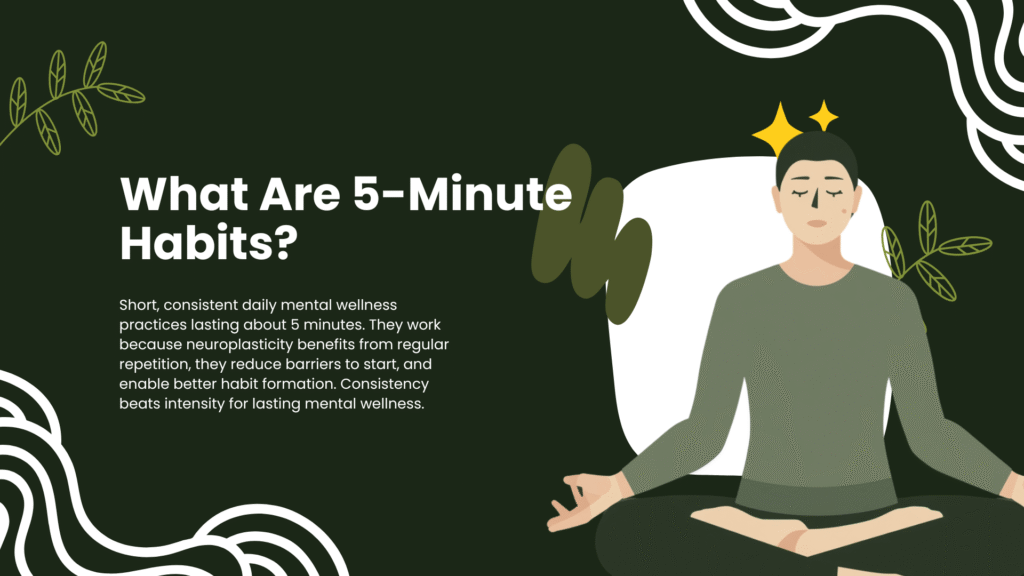
5-minute habits for mental wellness are short, intentional actions designed to improve emotional and psychological health. They work because they are easy to repeat, reduce resistance, and leverage consistency over intensity leading to long-term mental clarity, reduced stress, and improved emotional balance.
What Does “5-Minute Habits for Mental Wellness” Actually Mean in Practice?

In practice, 5-minute habits for mental wellness are quick, focused actions like breathing exercises, journaling, or mindfulness that can be completed daily without effort. These habits prioritize consistency, making mental health care accessible even during busy schedules.
How can micro-habits improve mental health in just five minutes a day?
Micro-habits tap into a powerful psychological principle: small actions reduce resistance. When a task feels manageable, the brain is more likely to engage.
Here’s how they help:
- Lower mental friction – A 5-minute task feels achievable
- Build momentum – Small wins create a sense of progress
- Reduce overwhelm – No need for major time commitments
- Encourage repetition – Consistency leads to habit formation
For example, someone feeling overwhelmed at work might take five minutes to practice deep breathing. That short pause can reset stress levels and improve focus for the next hour.
Why are short mental wellness habits easier to stick with than long routines?
Long routines often fail because they demand motivation. Short habits rely on structure instead.
- They fit into existing schedules
- They don’t require “perfect conditions”
- They minimize procrastination
- They create psychological rewards quickly
This is why many productivity experts recommend starting small. According to research discussed in this, tiny habits are more sustainable than ambitious ones.
Why Are 5-Minute Mental Wellness Habits Backed by Psychology and Science?
How does consistency impact mental wellness more than duration?
Consistency builds identity. When someone practices a habit daily even briefly it reinforces a self-image like “I take care of my mental health.”
Key insights:
- Daily repetition strengthens neural pathways
- Short sessions reduce burnout
- Habits become automatic over time
A person who meditates for five minutes daily often benefits more than someone who meditates for an hour once a week.
What role does neuroplasticity play in building small mental health habits?
Neuroplasticity refers to the brain’s ability to reorganize itself by forming new neural connections.
- Repeated small actions rewire thought patterns
- Positive habits reduce negative thinking loops
- Emotional responses become more balanced
Even five minutes of mindfulness can gradually train the brain to respond calmly instead of reacting impulsively.
Who Can Benefit the Most from 5-Minute Habits for Mental Wellness?
Are these habits suitable for students, professionals, and seniors?
Absolutely. These habits are universal because they require minimal effort.
- Students: Manage exam stress and improve focus
- Professionals: Reduce burnout and increase productivity
- Seniors: Maintain emotional balance and cognitive health
Can beginners start improving mental health with just five minutes daily?
Yes, and that’s the beauty of it. Beginners often struggle with complex routines. Starting with five minutes:
- Builds confidence
- Creates consistency
- Prevents early burnout
What Are the Best 5-Minute Habits for Mental Wellness You Can Start Today?
The best 5-minute habits for mental wellness include gratitude journaling, breathing exercises, mindfulness, digital detox, and reflection. These habits target stress, focus, and emotional balance, making them easy to implement daily without disrupting routines.
What Are Simple Morning 5-Minute Habits for Mental Wellness?
Morning 5-minute habits for mental wellness like gratitude, breathing, and mindfulness help set a calm, focused tone for the day. They reduce anxiety and improve emotional resilience before daily stress begins.
How can a 5-minute gratitude practice improve your mood instantly?
Gratitude shifts attention from stress to positivity.
Steps:
- Write down 3 things to be grateful for
- Reflect on why they matter
- Visualize those moments briefly
Benefits:
- Improves mood instantly
- Reduces negative thinking
- Builds emotional resilience
What are quick breathing exercises to reduce morning anxiety?
Try this simple technique:
- Inhale for 4 seconds
- Hold for 4 seconds
- Exhale for 6 seconds
- Repeat for 5 minutes
This regulates the nervous system and reduces anxiety.
Can a short mindfulness routine set a positive tone for the day?
Yes. Even 5 minutes of mindfulness:
- Improves awareness
- Reduces stress
- Enhances focus
What Are Effective 5-Minute Habits for Mental Wellness During Work or Study?
How can a 5-minute digital detox boost focus and clarity?
Constant notifications drain attention.
Quick detox method:
- Turn off notifications
- Close unnecessary tabs
- Sit quietly for 5 minutes
This resets cognitive overload.
What are quick desk exercises to reduce stress and mental fatigue?
- Neck stretches
- Shoulder rolls
- Eye relaxation (20-20-20 rule)
These reduce physical tension that contributes to mental fatigue.
How does a short journaling session improve productivity and emotional balance?
Writing thoughts helps organize them.
Try:
- Listing top 3 priorities
- Writing current worries
- Noting one solution
This clears mental clutter.
What Are Powerful Evening 5-Minute Habits for Mental Wellness?
How can reflection habits improve mental clarity before sleep?
Reflection helps process the day.
Steps:
- Review what went well
- Identify one improvement
- Let go of unresolved stress
What are quick relaxation techniques to calm the mind at night?
- Progressive muscle relaxation
- Deep breathing
- Listening to calming audio
Can a 5-minute meditation improve sleep quality and reduce stress?
Yes, short meditation reduces cortisol levels and prepares the mind for sleep.
What Are Scientifically Proven 5-Minute Habits for Mental Wellness?
Scientifically proven 5-minute habits for mental wellness include mindfulness meditation, breathing exercises, gratitude journaling, and brief physical movement. These practices are backed by research showing measurable reductions in stress, anxiety, and emotional reactivity.
Which evidence-based practices show immediate mental health benefits?
- Mindfulness meditation
- Controlled breathing
- Gratitude journaling
- Light physical activity
How does mindfulness meditation in short bursts impact stress levels?
Short sessions:
- Lower cortisol
- Improve emotional regulation
- Enhance focus
How Can You Build, Sustain, and Optimize 5-Minute Habits for Mental Wellness Long-Term?
To sustain 5-minute habits for mental wellness, individuals should focus on habit stacking, consistency, realistic expectations, and personalization. Long-term success depends on integrating these habits into daily routines rather than treating them as separate tasks.
How Do You Build a Daily Routine Using 5-Minute Habits for Mental Wellness?
Building a routine involves stacking 5-minute habits onto existing activities, keeping them simple, and repeating them daily. This reduces effort and increases consistency.
What is the best way to stack small mental wellness habits into your routine?
Habit stacking example:
- After brushing teeth → 5-minute breathing
- After lunch → quick walk
- Before bed → reflection
How can you stay consistent with 5-minute mental health practices?
- Set reminders
- Keep expectations low
- Track progress
What Are Common Mistakes to Avoid When Practicing 5-Minute Mental Wellness Habits?
Why do people fail to maintain small habits despite their simplicity?
- Overcomplicating routines
- Expecting instant results
- Skipping consistency
How can unrealistic expectations impact mental wellness routines?
Expecting dramatic change quickly leads to frustration and quitting.
How Can You Personalize 5-Minute Habits for Mental Wellness Based on Your Lifestyle?
What are the best habits for busy professionals with limited time?
- Breathing between meetings
- Short walks
- Quick journaling
How can students adapt 5-minute mental wellness habits during exams?
- Focused breathing
- Study break mindfulness
- Positive affirmations
What are suitable micro-habits for stay-at-home individuals?
- Gratitude journaling
- Stretching
- Mindful tea breaks
How Do 5-Minute Habits for Mental Wellness Improve Long-Term Emotional Health?
5-minute habits for mental wellness create lasting change by reinforcing positive behaviors daily. Over time, they reduce stress, anxiety, and burnout while improving emotional resilience and clarity.
Can small daily actions lead to lasting mental health transformation?
Yes. Small actions compound over time.
How do these habits reduce anxiety, stress, and burnout over time?
- Regulate stress response
- Improve emotional control
- Build resilience
What Tools and Techniques Can Help You Track 5-Minute Mental Wellness Habits?
Are habit trackers effective for maintaining mental wellness routines?
Yes, they provide:
- Visual progress
- Motivation
- Accountability
What apps or methods can support consistency and motivation?
- Habit tracking apps
- Journals
- Calendar reminders
How Do 5-Minute Habits for Mental Wellness Compare to Traditional Self-Care Routines?
5-minute habits for mental wellness are more accessible and sustainable than traditional self-care routines. While long routines can be effective, short habits are easier to maintain and often deliver faster, more consistent results.
Comparison Table
| Feature | 5-Minute Habits | Traditional Self-Care |
|---|---|---|
| Time Required | Very low | High |
| Consistency | High | Low |
| Accessibility | Easy | Moderate |
| Results | Gradual but steady | Variable |
Are Short Mental Wellness Habits More Effective Than Long Self-Care Practices?
What are the advantages of micro-habits over intensive routines?
- Easier to start
- More consistent
- Less overwhelming
Can short habits deliver faster mental health benefits?
Yes, especially for stress relief and focus.
Can 5-Minute Habits Replace Therapy or Professional Mental Health Support?
When should you combine small habits with professional help?
- Chronic anxiety
- Depression
- Trauma
What are the limitations of quick mental wellness techniques?
They are supportive not a replacement for therapy.
What Do Experts Say About 5-Minute Habits for Mental Wellness?
Are psychologists recommending micro-habits for stress management?
Yes, especially for building consistency.
What research supports the effectiveness of short daily habits?
Behavioral psychology strongly supports habit-based change.
How Can You Stay Motivated to Practice 5-Minute Habits for Mental Wellness Every Day?
Staying motivated with 5-minute habits for mental wellness requires consistency, accountability, and making habits enjoyable. Small wins and visible progress keep motivation high over time.
What Are the Best Ways to Stay Consistent with 5-Minute Mental Wellness Habits?
How can habit stacking and reminders improve consistency?
They reduce reliance on motivation.
What role does accountability play in maintaining mental wellness routines?
Accountability increases commitment.
How Do You Overcome Laziness or Lack of Motivation in Daily Mental Wellness Practices?
What are quick tricks to start even when you feel unmotivated?
- Start with 1 minute
- Remove distractions
- Focus on simplicity
How can you make 5-minute habits enjoyable and rewarding?
- Pair with music
- Track progress
- Celebrate small wins
How Can You Measure Progress with 5-Minute Habits for Mental Wellness?
What signs indicate improved mental health over time?
- Better focus
- Reduced stress
- Improved mood
How can journaling or tracking help visualize progress?
It shows patterns and improvements.
What Are Real-Life Examples of 5-Minute Habits for Mental Wellness That Actually Work?
Real-life examples of 5-minute habits for mental wellness include gratitude journaling, mindful breathing, quick walks, and reflection. These habits are practical, easy to follow, and have helped many individuals improve focus, reduce stress, and build emotional resilience.
What Is a Sample 7-Day Plan for 5-Minute Habits for Mental Wellness?
How can beginners structure a weekly routine easily?
7-Day Plan:
- Day 1: Gratitude journaling
- Day 2: Breathing exercise
- Day 3: Mindfulness
- Day 4: Reflection
- Day 5: Digital detox
- Day 6: Light stretching
- Day 7: Meditation
What is the simplest way to start today and see results fast?
Start with just one habit.
What Is the Ultimate Daily Checklist of 5-Minute Habits for Mental Wellness?
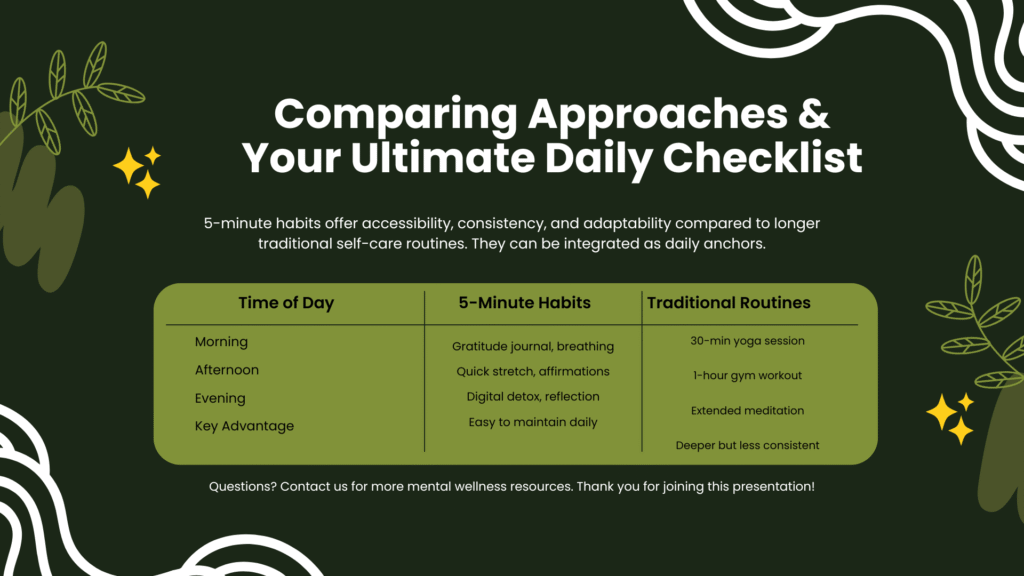
The ultimate checklist includes morning gratitude, midday reset, and evening reflection. These 5-minute habits for mental wellness create a balanced daily routine that supports long-term emotional health.
What Should Your Morning, Afternoon, and Evening Checklist Include?
- Morning: Gratitude + breathing
- Afternoon: Movement + detox
- Evening: Reflection + meditation
How can you create a balanced routine with multiple 5-minute habits?
Spread them throughout the day.
What is the ideal sequence of habits for maximum impact?
Morning → Focus
Afternoon → Reset
Evening → Relax
How Can You Adapt This Checklist for Long-Term Success?
How often should you update or change your habits?
Every few weeks.
What are the best ways to scale your mental wellness routine gradually?
- Increase duration slowly
- Add new habits carefully
Final Thought
The transformation doesn’t come from intensity it comes from consistency. These 5-minute habits for mental wellness may seem small, but practiced daily, they quietly reshape mental clarity, emotional strength, and overall well-being.


