


Feeling bloated or gassy can throw off your whole day. Maybe it’s that heavy feeling after lunch, or sometimes your stomach just feels uncomfortably full without any obvious reason. If you’ve tried adjusting your diet, moving more, or even over-the-counter remedies without much relief, there’s good news: Herbal Tea for Bloating and Gas Relief can provide gentle, effective support for your digestive system. Over time, these teas don’t just make you feel better—they can help your gut work more efficiently and reduce discomfort before it starts.
In this article, I’m sharing seven herbal teas for bloating and gas relief that I’ve tried personally and researched extensively, complete with preparation tips, who should avoid them, and little pro tips that make them even more effective. Whether you’re dealing with post-meal bloating, stress-induced stomach discomfort, or just want a daily digestive boost, there’s something here for you.
Why Herbal Teas for Bloating and Gas Relief Work
Before we dive into the teas themselves, it helps to understand why Herbal Tea for Bloating and Gas Relief can be so effective. The digestive process is delicate, and bloating often occurs when your intestines contract irregularly, food moves slowly, or excess gas builds up. Many herbal teas contain compounds that target these issues naturally:
- Muscle relaxation: Compounds like menthol (peppermint) or anethole (fennel) help relax intestinal muscles, letting trapped gas pass and reducing spasms.
- Anti-inflammatory properties: Ingredients such as gingerol in ginger or apigenin in chamomile calm inflammation in the digestive tract, which can reduce bloating caused by irritation.
- Improved digestion: Some teas, like dandelion root, stimulate bile production, helping your body digest fats better and preventing post-meal fullness.
- Hydration and detox support: Herbal teas increase fluid intake, which naturally helps move waste and gas through your system.
Unlike over-the-counter medications, Herbal Tea for Bloating and Gas Relief work gently, without harsh side effects. They can be tailored to your specific symptoms—some work best for quick relief, while others help maintain overall digestive health.
7 Herbal Teas for Bloating and Gas Relief
Here’s a detailed guide to the seven herbal teas that can help you feel lighter, calmer, and more comfortable. I’ve included preparation methods, scientific explanations, and practical tips so you know exactly how to use them.
1. Peppermint Tea – Best for After Meals

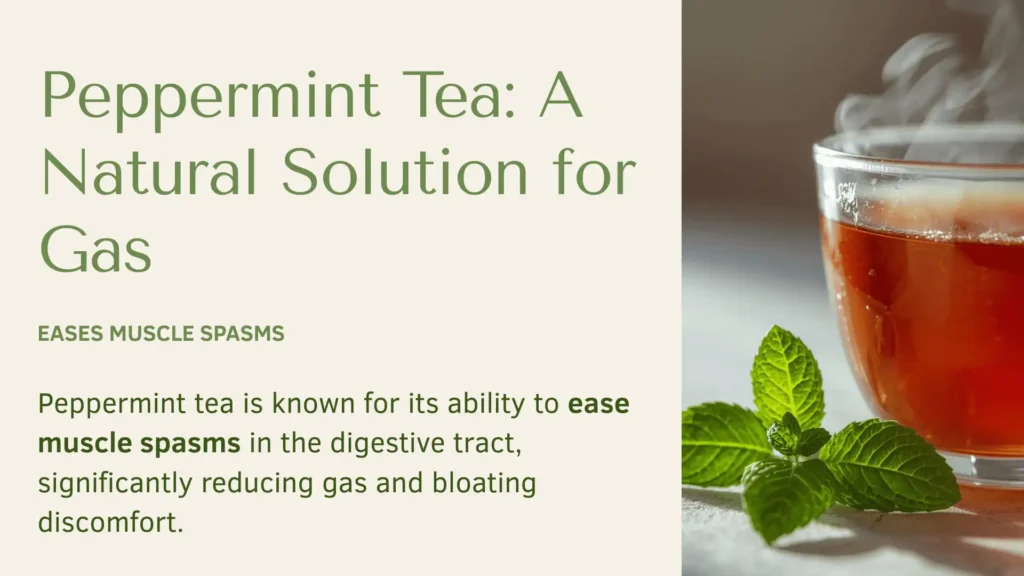
Peppermint tea is a classic choice for post-meal bloating. Its active ingredient, menthol, relaxes gastrointestinal muscles and promotes the easy passage of gas. It also stimulates bile production, which aids digestion of fats and heavy meals.
How to prepare:
Steep 1 peppermint tea bag or a handful of fresh leaves in hot water for 5–10 minutes. Drink warm for the best effect.
Who should avoid it:
People with GERD or acid reflux may find peppermint exacerbates symptoms.
Pro tip:
Sip peppermint tea right after meals rather than waiting for bloating to start—it can prevent discomfort before it happens.
2. Ginger Tea – Natural Gas Reliever

Ginger tea is well-known for its anti-inflammatory and digestive properties. Gingerol, the main compound in ginger, stimulates digestive enzymes and helps move food through the intestines faster. This makes it especially effective for relieving trapped gas and bloating.
How to prepare:
Slice fresh ginger root (1–2 inches) and boil in 2 cups of water for 5–10 minutes. You can add honey or lemon to improve flavor.
Who should avoid it:
People with gallstones or those on blood-thinning medications should consult a doctor before regular use.
Pro tip:
Drinking a cup of ginger tea in the morning can jumpstart digestion and reduce bloating for the day.
3. Fennel Tea – Instant Relief at Home

Fennel tea is fantastic for quick bloating relief. It contains anethole, which has antispasmodic properties that relax the intestines and help gas pass naturally. It’s particularly useful for people with IBS or those who experience discomfort after rich meals.
How to prepare:
Crush 1–2 teaspoons of fennel seeds and steep in hot water for 5–10 minutes. Strain and sip slowly.
Who should avoid it:
Those on blood pressure medications should consult a doctor, as fennel may interact with certain drugs.
Pro tip:
Drink fennel tea after meals for maximum effect, or keep it handy for sudden bloating episodes.
4. Chamomile Tea – Soothes Digestion and Stress


Chamomile is famous for its calming effect, but it’s also excellent for digestion. Apigenin, a flavonoid in chamomile, reduces gut inflammation and helps relieve stress-related bloating.
How to prepare:
Steep chamomile flowers or a tea bag in hot water for 5 minutes. Drink before bedtime for relaxation.
Who should avoid it:
If you’re allergic to ragweed, chamomile could trigger reactions.
Pro tip:
Chamomile tea works best in the evening—it helps digestion while also promoting restful sleep.
5. Rooibos Tea – Caffeine-Free Gut Support
Rooibos tea is naturally caffeine-free and packed with antioxidants. It reduces gut inflammation, supports digestion, and can help ease bloating caused by dietary irritation.
How to prepare:
Steep 1 tsp of loose rooibos or a tea bag in hot water for 5 minutes. Add a slice of lemon or honey if desired.
Who should avoid it:
Those with kidney stone history should consult a doctor, as rooibos may slightly increase risk.
Pro tip:
Rooibos is great iced or hot and can be used as a daily digestive support tea.
6. Lemon Balm Tea – Calms Gas and Cramping

Lemon balm, part of the mint family, is excellent for relieving bloating, gas, and mild cramps. It works by calming the digestive tract and supporting smooth digestion.
How to prepare:
Steep fresh or dried lemon balm leaves in hot water for 5–10 minutes.
Who should avoid it:
Those on thyroid medications should consult a doctor, as lemon balm may affect hormone absorption.
Pro tip:
A cup before bedtime can help reduce stress-induced bloating and improve sleep.
7. Dandelion Root Tea – Detox & Digestion
Dandelion root tea supports liver function and stimulates bile production, aiding fat digestion and reducing bloating. Its mild diuretic effect can also help eliminate excess water weight.
How to prepare:
Steep 1 tsp of dried dandelion root in hot water for 5–10 minutes.
Who should avoid it:
If allergic to ragweed, avoid this tea.
Pro tip:
A morning cup kickstarts digestion and liver detox naturally.
Choosing the Right Herbal Tea for Bloating and Gas Relief
Not every tea works the same for every type of bloating. Here’s a quick guide:
| Symptom | Best Tea |
|---|---|
| Post-meal bloating | Peppermint, Fennel |
| Gas relief | Ginger, Fennel |
| Stress-induced bloating | Chamomile, Lemon Balm |
| Daily gut support | Rooibos, Dandelion Root |
| Sensitive stomach | Peppermint, Chamomile, Rooibos |
By picking teas that match your symptoms, you can enjoy faster relief and more consistent comfort. Sometimes combining teas, like peppermint after lunch and chamomile at night, gives the best results.
Additional Tips for Reducing Bloating
- Eat slowly and chew food thoroughly to reduce swallowed air.
- Stay hydrated—water helps flush gas and move food along.
- Avoid carbonated drinks if bloating is frequent.
- Gentle movement after meals, like walking, stimulates digestion.
- Pair teas with low-FODMAP foods if you’re sensitive to certain carbohydrates.
Conclusion
Bloating doesn’t have to control your day. With Herbal Tea for Bloating and Gas Relief like peppermint, ginger, fennel, chamomile, rooibos, lemon balm, and dandelion root, you can address both immediate discomfort and long-term digestive health. Start with teas suited to your symptoms, experiment with timing, and incorporate them into your daily routine. Small, consistent steps make a big difference for your gut.
Call to Action: Try peppermint or fennel tea tonight after dinner and notice how your stomach feels tomorrow. Over time, herbal teas for bloating and gas relief can become your go-to digestive support.
FAQ – Herbal Teas for Bloating and Gas Relief
Which tea works fastest for bloating?
Peppermint and fennel teas provide rapid relief by relaxing digestive muscles and helping gas pass naturally, usually within 10–15 minutes.
Can I drink peppermint tea daily?
Yes, but avoid if you have acid reflux or GERD, as it may worsen symptoms.
How long does ginger tea take to work?
Ginger tea typically works within 15–30 minutes, depending on your meal and digestion.
Are herbal teas safe for children?
Most are safe in small amounts, but consult a pediatrician for young children.
Can these teas replace medication for digestive issues?
No. They are supportive remedies. Persistent or severe symptoms should be evaluated by a healthcare professional.
Can I combine teas for better results?
Yes. Peppermint after lunch and chamomile at night is a safe, effective combination.
Is caffeine-free tea better for bloating?
Caffeine may irritate the stomach, so caffeine-free teas like rooibos or chamomile are ideal.


