

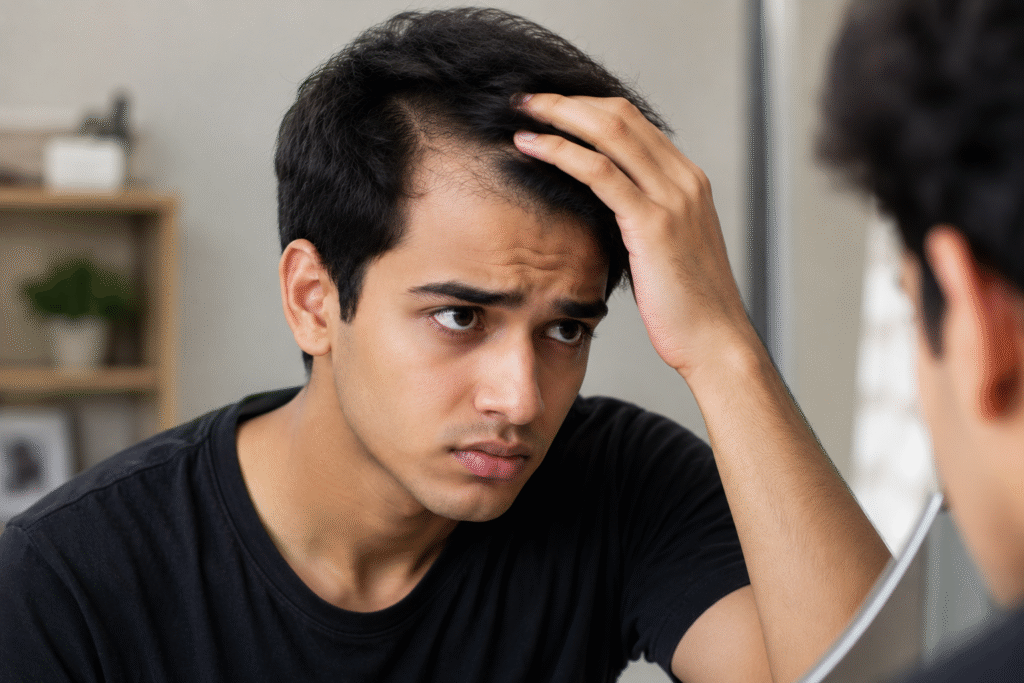
Looking in the mirror and noticing your hairline moving backward can feel like a shock, especially if you are still in your late teens or early twenties. It is easy to think of a receding hairline as an issue that only affects older adults. However, many young people are starting to notice their foreheads looking a bit higher or their temples thinning out much earlier than expected.
If you are going through this, you might feel anxious, frustrated, or isolated. The truth is, you are definitely not alone. Early hairline changes are becoming incredibly common among young adults.
The good news? Seeing changes early means you have a much better chance of understanding what is going on and taking steps to protect your hair. Let us break down exactly what is happening under the surface and how you can manage it.
What is a Receding Hairline?
A receding hairline occurs when the hair along the forehead and temples stops growing and gradually shifts backward.
For young men, this often starts as thinning around the temples, creating a distinct “M” shape over time. For young women, it more commonly looks like a general thinning around the front of the face or a widening part line.
It is important to know that human hair naturally goes through changes as you mature. However, when the hair follicles actively shrink and produce weaker, thinner strands before stopping completely, it transitions from a natural maturation process into early stage hair loss.
Common Causes of an Early Receding Hairline
When your hairline begins to shift at a young age, your body is usually responding to a mix of genetics, internal changes, and daily habits. Here are the primary reasons it happens:
1. Genetics and DHT Sensitive Hair Follicles
The most common cause of early hair thinning is your family tree. If your parents or relatives lost their hair early, you may have inherited hair follicles that are highly sensitive to a hormone called dihydrotestosterone (DHT). DHT binds to the roots of your hair, gradually shrinking them until they can no longer grow healthy strands.
2. High Physical or Mental Stress
Balancing high school, college, or a new career can cause chronic psychological stress. When your body is under constant pressure, it releases high levels of the stress hormone cortisol. Extreme stress can shock your hair system, forcing active follicles to shut down and shed months before they naturally should.
3. Nutritional Deficiencies
Your body views hair as a non-essential luxury. If you do not eat enough nutrient-dense foods, or if you follow restrictive diets, your body will send its vitamins to your heart and lungs first. A lack of iron, protein, or zinc directly starves your hair roots, causing them to weaken and recede.
4. Traction and Severe Styling Strain
Sometimes the problem is purely mechanical. Wearing tight ponytails, heavy braids, or using aggressive styling waxes and gels can put physical stress on the fragile hairs at your forehead. Over time, this constant pulling damages the roots, leading to a localized receding line.
Types of Hairline Recession
Understanding the type of recession you are experiencing helps doctors figure out the right way to help you.
- Maturing Hairline: This is a natural adult transition. Between the ages of 17 and 21, a young man’s hairline will naturally shift back about a centimeter from its rounded “juvenile” shape. This is completely normal and does not mean you are going bald.
- Androgenetic Alopecia (Early Pattern Thinning): If the hairline continues to push past the mature stage, forming a deep “M” or “V” shape, it points toward inherited pattern thinning driven by hormones.
- Traction Alopecia: This is recession caused by external physical tension rather than internal hormones. It happens right where your hairstyles pull hardest against your scalp.
How It Uniquely Affects Young Men
While anyone can experience changes to their hair, young men face a distinct set of challenges when it comes to a changing hairline.
- Puberty and Testosterone Spikes: As young men mature, their testosterone levels naturally peak. If you are genetically vulnerable, this hormonal surge means more testosterone converts into DHT, leading to sudden hairline recession as early as age 16 or 18.
- Gym and Fitness Supplements: Many young men trying to stay fit use mass gainers or pre-workout formulas. Some performance-focused supplements can accidentally increase chemical activity in the body that accelerates genetic hair shedding.
- Styling Damage: Trendy styles that rely heavily on pomades, regular harsh heat, or constant tight brushing can weaken the fine hairs right along a young man’s forehead, causing them to snap easily.
Signs and Symptoms to Watch For
How can you tell the difference between normal hair shedding and a true receding hairline? Look for these early warning signs:
- The “M” Shape Formation: The hair at your temples moves back much faster than the hair in the center of your forehead.
- Miniaturization: The hairs right at the front of your head start looking short, wispy, transparent, and baby-thin compared to the thick hair at the back of your head.
- Excessive Shedding in the Sink: Noticing a sudden spike in loose hairs left behind in the sink or shower drain after you style it.
- Changes in Styling Behavior: Finding that your usual hairstyle no longer sits the right way because the front coverage has changed.
Risk Factors
Your chances of experiencing an early shift in your hairline increase if you fit into these specific categories:
| Risk Factor | Why It Impacts the Hairline |
| Close Family Baldness | Having a father, uncle, or grandfather who lost their hair early increases genetic risk. |
| Poor Sleep Patterns | Getting less than 7 hours of sleep regularly prevents your body from properly repairing hair tissue. |
| Frequent Scalp Inflammation | Dealing with severe dandruff or fungal issues weakens the skin anchor around the hair root. |
| Using Heavy Chemical Bleaches | Constantly altering your hair color damages the physical strength of the hair shaft. |
How Is It Diagnosed?
If you are worried about your hair, consulting a dermatologist is the safest path forward. They will pinpoint the issue using a few simple steps:
- Visual Scalp Mapping: The doctor uses a specialized magnifying lens to check if the follicles at the front of your head are shrinking compared to the sides.
- Family History Review: They will map out your genetic background to see if pattern baldness runs in your family.
- Lab Work: A simple blood test checks your iron levels, thyroid performance, and vitamin balances to rule out internal health deficiencies.
Treatment Options
The best treatment depends heavily on whether your hair is just maturing or experiencing genuine thinning. Common medical options include:
Topical Stimulants
For true genetic thinning, a doctor may recommend over-the-counter or prescription topical solutions. These treatments help widen the blood vessels around your hair roots, providing them with more oxygen and keeping them in the growth phase longer.
DHT Blockers
If a dermatologist confirms early pattern hair loss, they may discuss prescription medications for older teens and young adults that safely reduce the amount of DHT interacting with your follicles.
Addressing Scalp Health
If your hairline is struggling due to irritation or dandruff, using specialized anti-fungal or soothing shampoos can clear the scalp, creating a clean environment for new hair to thrive.
Lifestyle Changes to Protect Your Hair
Making small, consistent changes to your daily routine can take a significant amount of stress off your hairline.
- Switch to Loose Styles: Give your roots a break. Avoid tight caps, heavy beanies, or hairstyles that yank on your forehead hairs.
- Ditch the Extreme Heat: Let your hair air-dry whenever possible. If you must use a hair dryer, keep it on the cool setting and hold it several inches away from your skin.
- Prioritize Mental Rest: Practice stress relief. Spending time outdoors, meditating, or keeping a journal can help lower the cortisol levels that hurt your hair cycles.
- Get Consistent Sleep: Aim for 8 hours of restful sleep to ensure your body has the energy it needs to build new cellular structures.
Diet Recommendations for Hair Health
Your hair requires an absolute abundance of specific nutrients to maintain its strength.
[Nutrient-Rich Foods] ---> [Better Blood Quality] ---> [Nourished Hair Roots] ---> [Thicker Hairline]
To support your hairline from the inside out, add these key foods to your plate:
- Quality Proteins: Eggs, Greek yogurt, lentils, tofu, and lean meats provide the foundational building blocks for hair growth.
- Spinach and Leafy Greens: These are packed with iron and folate, which keep your red blood cells healthy so they can carry oxygen directly to your scalp.
- Nuts and Seeds: Chia seeds, flaxseeds, and walnuts provide crucial omega-3 fatty acids that naturally condition your hair shafts.
- Citrus Fruits: Oranges and lemons provide Vitamin C, which helps your body absorb iron efficiently.
Prevention Tips
You can take proactive control of your hair health long before major thinning sets in:
- Be very gentle when towel-drying your hair; pat it dry instead of rubbing it vigorously.
- Use a wide-tooth comb instead of a fine brush when detangling wet hair.
- Avoid using cheap, harsh styling gels that dry out the scalp skin.
- Get regular checkups to ensure your internal health markers stay balanced.
Potential Complications
While a changing hairline does not pose a risk to your physical health, its impact on your mental well-being can be significant.
For young adults, hair is often closely tied to self-confidence and identity. Dealing with early thinning can lead to anxiety, low self-esteem, and social withdrawal. Recognizing the emotional toll is highly important, and seeking support from family, friends, or a professional counselor can help you navigate this period with confidence.
Frequently Asked Questions
1. Does wearing a baseball cap cause a receding hairline?
No. Wearing a cap does not cause your hair to recede. However, if the cap is exceptionally tight and constantly rubs against the front of your head, it can cause friction damage to the fragile hairs.
2. Can a receding hairline grow back completely?
It depends on the cause. If your hair is thinning due to poor diet, high stress, or tight hairstyles, it can fully grow back once you fix those issues. If it is caused by genetics, medical treatments can help slow down or stop the process, but completely reversing it is harder.
3. How do I know if my hairline is just maturing or actually receding?
A mature hairline usually stops moving back after about a centimeter and stays stable for years. A truly receding hairline will continue to thin out, move further back, and show signs of baby-fine, wispy hairs at the edges.
4. Does washing my hair everyday make it recede faster?
No. Daily washing simply clears away the strands that have already naturally detached from the root. It does not affect the actual growth cycle of your follicles.
5. Can working out at the gym cause hair loss?
Normal exercise is actually fantastic for your hair because it boosts blood circulation. However, using heavy gym supplements that alter your hormone levels can speed up thinning if you are already genetically prone to it.
Conclusion
Noticing changes in your hair at a young age can feel overwhelming, but it is important to remember that a receding hairline is a manageable situation. Whether your hair is simply transitioning into a mature look, or your body is responding to stress, nutrition, or genetics, you have plenty of options.
The worst thing you can do is stress about it in silence. By identifying the causes early and taking a proactive approach to your health, you can find a solution that keeps you feeling confident.
